Key takeaways
- Monitoring-only tools (Otterly.AI, parts of Profound) show you where you're invisible but leave you to figure out the fix yourself.
- Promptwatch is the only platform in this comparison that closes the loop: gap analysis, AI content generation, crawler logs, and traffic attribution in one place.
- Profound is strong for enterprise teams that need deep analytics and don't mind a higher price tag -- but it lacks Reddit tracking and content generation.
- Otterly.AI is a reasonable entry point for small teams on tight budgets, though its feature ceiling is low.
- Qwairy is newer and positioned as a strategy-first GEO platform -- worth watching, but still maturing.
- Price alone is a poor guide here. The real question is whether a tool helps you act on what it finds.
The GEO platform market has gotten crowded fast. Two years ago there were maybe five tools worth evaluating. Now there are dozens, and the differences between them are genuinely hard to see from a pricing page. Qwairy, Promptwatch, Profound, and Otterly.AI are four of the most-discussed names right now -- and they represent four meaningfully different philosophies about what a GEO tool should actually do.
This guide is a direct comparison. No vague "it depends" conclusions. By the end, you'll know which one fits your situation.
What "GEO platform" actually means in 2026
Generative Engine Optimization (GEO) is the practice of getting your brand cited, recommended, and referenced in AI-generated answers -- ChatGPT, Perplexity, Google AI Overviews, Gemini, Claude, and the rest. It's distinct from traditional SEO, where you're chasing a ranked link. In AI search, you either get mentioned in the answer or you don't exist.
A GEO platform, at minimum, should tell you when and where your brand appears in those answers. The better ones go further: they tell you why you're appearing (or not), what your competitors are doing differently, and what content you need to create to close the gap.
That last part -- the "what to do about it" part -- is where these four tools diverge sharply.
The four platforms at a glance
Qwairy
Qwairy positions itself as a strategy-first GEO platform. The pitch is that most visibility tools give you data but no direction, and Qwairy tries to bridge that with structured optimization workflows. It's a newer entrant, and the feature set is still developing, but the strategic framing is interesting.

Promptwatch
Promptwatch is the most comprehensive platform in this comparison. It tracks 10 AI models (ChatGPT, Perplexity, Google AI Overviews, Google AI Mode, Claude, Gemini, Meta/Llama, DeepSeek, Grok, Mistral, Copilot), generates AI-optimized content through its Content Agents, and logs actual AI crawler activity on your site. It's used by 1,480+ brands including Booking.com and Center Parcs.

Profound
Profound is the enterprise-focused option. It has strong analytics depth and is well-regarded for the quality of its visibility data. The trade-off: it's priced roughly 48% higher than comparable platforms, and it's primarily a monitoring and analytics tool -- it won't help you create content to fix what it finds.

Otterly.AI
Otterly.AI was one of the first dedicated AI search monitoring tools and still has a loyal user base. It's affordable, reasonably easy to use, and covers the major AI platforms. The ceiling is low, though -- no crawler logs, no content generation, no Reddit or YouTube tracking.

Feature-by-feature comparison
This is where the real differences show up. The table below covers the capabilities that actually matter for a GEO workflow.
| Feature | Qwairy | Promptwatch | Profound | Otterly.AI |
|---|---|---|---|---|
| AI models tracked | Select major models | 10 (ChatGPT, Perplexity, Gemini, Claude, Grok, DeepSeek, Copilot, Meta AI, AI Overviews, AI Mode) | Major models | ChatGPT, Perplexity, Gemini, AI Overviews, Copilot |
| Prompt volume estimates | Limited | Yes | Yes | No |
| Competitor visibility heatmaps | Basic | Yes | Yes | Limited |
| Answer gap analysis | Yes | Yes | Partial | No |
| Content generation | No | Yes (Content Agents) | No | No |
| AI crawler logs | No | Yes | No | No |
| Reddit & YouTube tracking | No | Yes | No | No |
| ChatGPT Shopping tracking | No | Yes | No | No |
| Traffic attribution | No | Yes | Limited | No |
| Page-level citation tracking | No | Yes | Yes | No |
| Multi-language / multi-region | Limited | Yes | Yes | Limited |
| Looker Studio integration | No | Yes | Yes | No |
| Free trial | Yes | Yes | Yes | Yes |
| Starting price | ~$99/mo | $99/mo | Higher (~$200+/mo) | ~$49/mo |
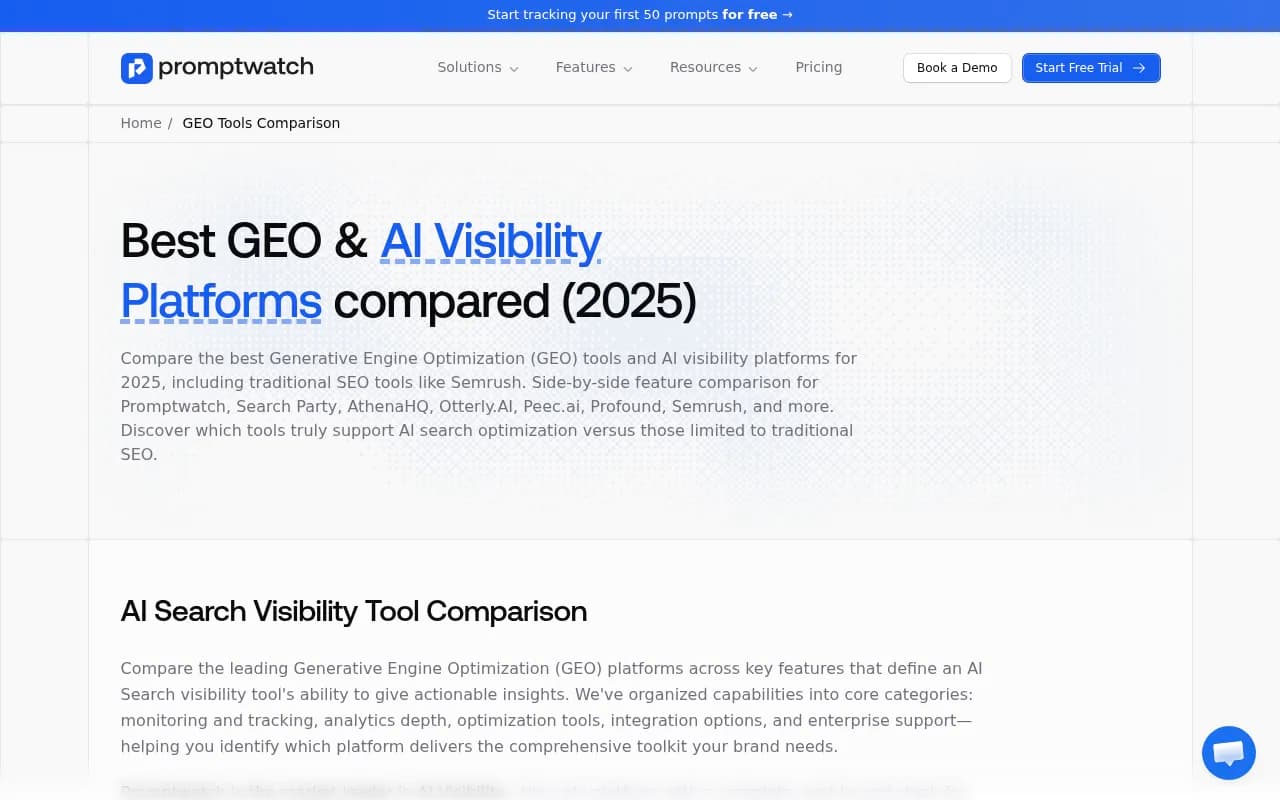
A few things jump out. Profound and Promptwatch are the only two with serious analytics depth. But Profound stops at analytics -- it has no content generation, no crawler logs, and no Reddit tracking. Promptwatch covers all of those. Otterly.AI is the cheapest but also the most limited. Qwairy is somewhere in the middle, with a strategic orientation but fewer data signals than either Profound or Promptwatch.
Monitoring vs. optimization: the core divide
Here's the thing most comparison posts skip over. There's a fundamental difference between a tool that monitors your AI visibility and one that optimizes it. Most tools in this space -- including Otterly.AI and, to a large extent, Profound -- are monitoring tools. They show you a dashboard. They tell you your brand appeared in 34% of relevant prompts last week, down from 41%. They might even show you which competitors are winning.
Then they stop.
You're left to figure out: what content do I need to write? Which prompts should I target first? Why is ChatGPT citing my competitor's blog post instead of mine?
Promptwatch is built around answering those questions. Its Answer Gap Analysis shows you the specific prompts where competitors are visible and you're not. Its Content Agents generate articles, listicles, and comparisons grounded in that gap data -- not generic SEO filler, but content engineered around what AI models are actually looking for. And its crawler logs show you exactly which pages AI bots are reading, how often, and whether those crawls are turning into citations.
That cycle -- find gaps, create content, track results -- is what separates an optimization platform from a tracker.
Qwairy is trying to build something similar with its strategy-first approach, but it doesn't yet have the content generation or crawler log infrastructure that makes the loop complete.
Pricing breakdown
Pricing in this category is genuinely confusing because different tools count "prompts" differently, bundle features differently, and have enterprise tiers that aren't publicly listed.
Here's what's publicly available:
Promptwatch
- Essential: $99/mo (1 site, 50 prompts, 5 articles/mo)
- Professional: $249/mo (2 sites, 150 prompts, 15 articles, crawler logs, state/city tracking)
- Business: $579/mo (5 sites, 350 prompts, 30 articles)
- Agency/Enterprise: custom pricing
Otterly.AI
- Starts around $49/mo for basic monitoring
- Higher tiers add more prompts and platforms
Profound
- Not publicly listed in full, but third-party analysis puts it roughly 48% higher than comparable platforms at similar prompt counts. Enterprise-oriented pricing.
Qwairy
- Pricing is available on their site; positioned as accessible for growth teams.
One important note on Promptwatch's pricing: the $99 Essential tier includes content generation (5 articles/mo), which no other entry-level plan in this comparison offers. You're not just paying for a dashboard -- you're paying for a tool that can actually produce output.
Who each platform is actually for
Qwairy is for...
Teams that want a structured GEO strategy framework and are comfortable working with a newer platform. If you like the idea of guided optimization workflows and don't need deep data signals yet, Qwairy is worth a look. Just go in knowing it's still building out its feature set.
Promptwatch is for...
Marketing and SEO teams that need the full picture: tracking, gap analysis, content creation, and attribution. It's particularly strong for brands that are already investing in content and want to make sure that content is actually getting picked up by AI models. The crawler logs are genuinely useful for technical teams who want to understand why certain pages get cited and others don't. Agencies managing multiple clients will want to look at the Business or Agency tiers.
Profound is for...
Enterprise teams with dedicated analytics resources who need deep visibility data and are less concerned about content creation workflows. If your team has writers who can act on the data independently, Profound's analytics depth is real. Just factor in the higher price and the absence of Reddit/YouTube signals, which matter more than most enterprise teams realize.
Otterly.AI is for...
Small teams or solo marketers who are just getting started with AI visibility tracking and want a low-cost way to see where they stand. It's a reasonable first step. You'll likely outgrow it within 6-12 months if you're serious about GEO.
The Reddit and YouTube blind spot
One thing that doesn't get enough attention in GEO comparisons: Reddit and YouTube are major citation sources for AI models. When ChatGPT recommends a product or answers a question, it's often pulling from Reddit discussions, YouTube reviews, and third-party listicles -- not just brand websites.
Of the four platforms here, only Promptwatch tracks Reddit and YouTube as citation sources. That means if a Reddit thread is driving AI recommendations for your category and you don't know about it, you're missing a real optimization opportunity. Profound, Otterly.AI, and Qwairy don't surface this.
The crawler log advantage
AI crawler logs are another differentiator that's easy to overlook. Knowing that Perplexity crawled your homepage three times last week but never visited your product comparison page is actionable information. It tells you something is broken in how AI models discover your content -- maybe a robots.txt issue, maybe a page that's not linked well, maybe content that's technically accessible but not getting indexed.
Promptwatch is the only platform in this comparison with real-time AI crawler logs. You can connect through Cloudflare, Fastly, Vercel, server logs, or a tracking snippet. Most competitors lack this entirely.
A note on Otterly.AI's self-assessment
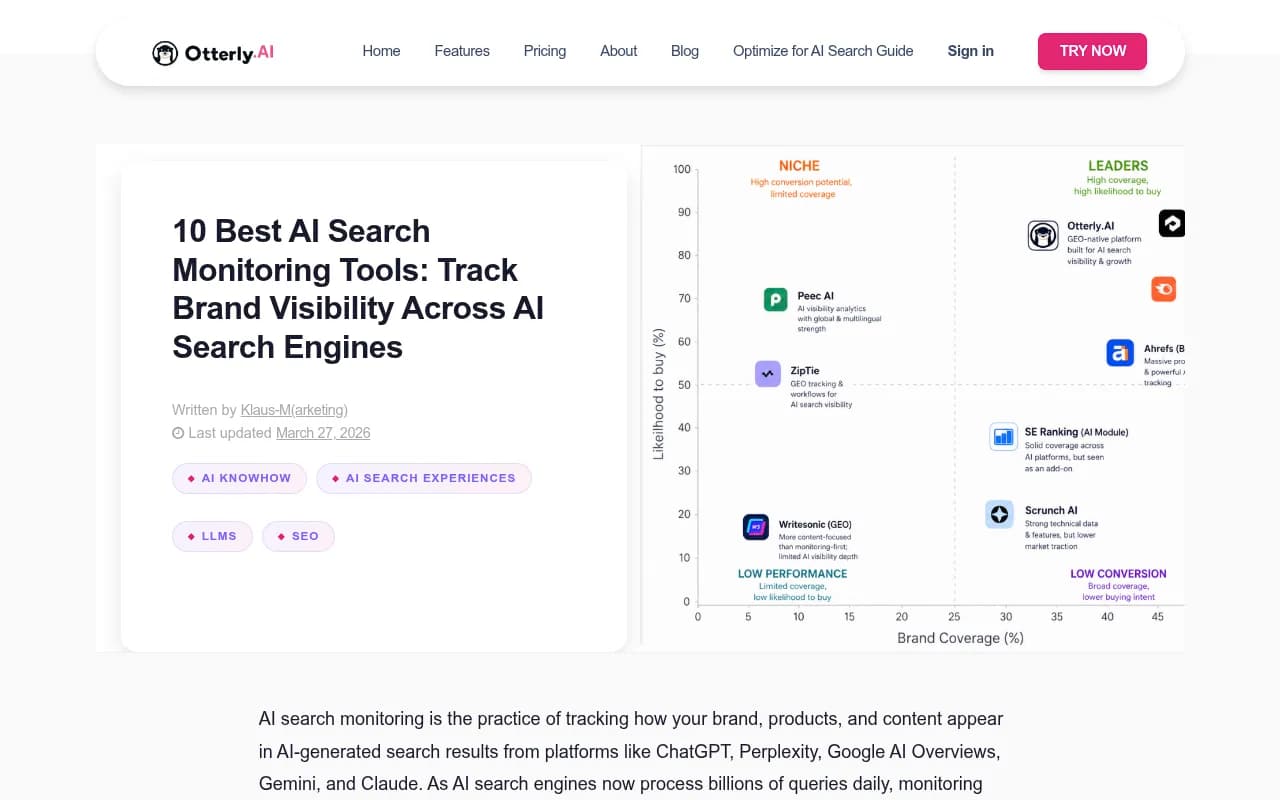
It's worth noting that Otterly.AI published its own "10 best AI search monitoring tools" list and placed itself first. That's not unusual for a SaaS company, but it's worth reading with that context in mind. Their list doesn't include Promptwatch, which is the market leader by most independent measures. When evaluating any tool's self-published comparisons, check whether they're comparing against the strongest alternatives or the most convenient ones.
What the data says about AI search traffic
One number worth keeping in mind: according to Otterly.AI's own 2026 research, 15% of all website traffic now comes from AI agents and bots, with ChatGPT accounting for 56% of AI search referral traffic. That's a significant enough share that "we'll figure out GEO later" is no longer a defensible position for most marketing teams.
The question isn't whether to invest in a GEO platform. It's which one gives you the best return on that investment.
Bottom line
If you're comparing these four platforms and trying to make a practical decision:
- Start with Otterly.AI only if budget is genuinely the primary constraint and you just need basic monitoring.
- Consider Profound if you're at an enterprise with dedicated analytics staff and the higher price is acceptable.
- Look at Qwairy if you want a strategy-first approach and are comfortable with a platform that's still maturing.
- Choose Promptwatch if you want a platform that doesn't just show you the problem but helps you fix it -- with content generation, crawler logs, Reddit/YouTube tracking, and traffic attribution all in one place.
The monitoring-only tools have their place. But if you're paying for a GEO platform in 2026, you should expect it to do more than hand you a report and wish you luck.