Key takeaways
- Profound is a strong enterprise monitoring platform with deep analytics, but it's primarily a tracker -- it shows you what's happening, not how to fix it.
- Promptwatch closes the loop with content gap analysis, an AI writing agent, and crawler logs that most competitors (including Profound) don't offer.
- Profound's pricing starts higher and scales steeply for enterprise use; Promptwatch's entry tier at $99/mo gives smaller teams access to meaningful optimization tools.
- If your team's bottleneck is "we don't know what content to create," Promptwatch wins. If you need deep enterprise dashboards and already have a content team, Profound is worth evaluating.
- Neither tool is perfect for every use case -- the right choice depends on whether you need monitoring or a full optimization workflow.
It's 2026, and AI search is no longer a trend worth "keeping an eye on." ChatGPT, Perplexity, Claude, and Google's AI Mode are now primary discovery channels for millions of buyers. If your brand isn't showing up in those responses, you're invisible to a growing chunk of your market.
That reality sent a lot of marketing teams scrambling for tools in 2025. Two names kept coming up in those conversations: Profound and Promptwatch. Both promised to help brands understand and improve their AI search visibility. Both attracted real customers. And both got compared, debated, and stress-tested by teams trying to figure out whether any of this actually works.
This is a retrospective look at how those two platforms performed -- what they got right, where they fell short, and which one is more likely to move the needle for your team in 2026.
What each platform is actually trying to do
Before comparing features, it helps to understand the fundamental difference in philosophy.
Profound was built around enterprise-grade analytics. The pitch is depth: detailed tracking of how your brand appears across AI engines, competitor displacement analysis, and the kind of dashboards that enterprise marketing teams can present to leadership. It's a serious monitoring platform.
Promptwatch was built around a different premise -- that monitoring alone isn't enough. The platform tracks visibility across 10 AI models (ChatGPT, Claude, Perplexity, Gemini, Grok, DeepSeek, Copilot, Meta AI, Google AI Overviews, and Google AI Mode), but the core value proposition is what happens after you see the data. Answer Gap Analysis shows you which prompts competitors rank for that you don't. A built-in AI writing agent generates content designed to get cited. Crawler logs show you which pages AI bots are actually reading. The whole thing is designed as a loop, not a dashboard.


That difference in philosophy shows up everywhere -- in the features, the pricing, and the kind of teams each platform attracts.
Feature comparison
Here's a direct look at how the two platforms stack up across the capabilities that matter most for AI search visibility:
| Feature | Profound | Promptwatch |
|---|---|---|
| AI models tracked | Multiple (enterprise focus) | 10 models incl. ChatGPT, Claude, Perplexity, Gemini, Grok, DeepSeek |
| Prompt tracking | Yes | Yes |
| Competitor visibility tracking | Yes | Yes (with heatmaps) |
| Answer gap / content gap analysis | Limited | Yes -- core feature |
| AI content generation | No | Yes (built-in writing agent) |
| AI crawler logs | No | Yes |
| Reddit & YouTube citation tracking | No | Yes |
| ChatGPT Shopping tracking | No | Yes |
| Prompt volume & difficulty scoring | No | Yes |
| Query fan-outs | No | Yes |
| Traffic attribution (GSC, server logs) | No | Yes |
| Multi-language / multi-region | Limited | Yes |
| Looker Studio integration | No | Yes |
| Free trial | Yes | Yes |
| Starting price | Higher (enterprise-oriented) | $99/mo (Essential) |
The pattern is pretty clear. Profound is strong on the monitoring side. Promptwatch covers monitoring and then keeps going into optimization, content creation, and traffic attribution.
Where Profound genuinely excels
It would be unfair to dismiss Profound. For enterprise teams with specific needs, it does some things well.
The competitor displacement tracking is genuinely useful. Profound shows you when prospects are researching your category and a competitor is getting cited instead -- which is a concrete, actionable signal even if the platform doesn't tell you how to fix it. SE Ranking's independent review of AI visibility tools called Profound "the best AI visibility tool for enterprises," and that assessment holds for teams that need polished dashboards and deep competitive intelligence.
If you're a large brand with a dedicated content team that just needs to know where the gaps are, Profound can feed that team good information. The problem is that most teams don't have that luxury.
Where Promptwatch pulls ahead
The honest answer is: in most of the places that matter for actually improving visibility, not just measuring it.
The content gap problem
The most common frustration I heard from teams using monitoring-only tools in 2025 was some version of: "We know we're invisible for these prompts. Now what?" Profound can tell you that competitors are winning for certain queries. It can't tell you what to write to change that.
Promptwatch's Answer Gap Analysis does something different. It surfaces the specific prompts where competitors appear and you don't, and it ties those gaps to content your site is missing. The built-in writing agent then generates articles, listicles, and comparisons grounded in citation data from over 880 million citations analyzed. That's not generic SEO content -- it's content built around what AI models are actually citing.
Crawler logs
This one is underappreciated. Most teams have no idea which pages AI crawlers are actually visiting, how often they return, or what errors they encounter. Promptwatch's AI Crawler Logs show you exactly that -- real-time logs of ChatGPT, Claude, Perplexity, and others hitting your site. Profound doesn't offer this. Neither do most competitors.
Why does it matter? Because you can't optimize for AI discovery if you don't know what AI engines are reading. A page might look fine to Google but be consistently skipped by AI crawlers due to a technical issue. Without crawler logs, you'd never know.
Reddit and YouTube tracking
This is a genuinely differentiated capability. AI models don't just cite brand websites -- they cite Reddit threads, YouTube videos, and forum discussions. Promptwatch surfaces which of those discussions are influencing AI recommendations in your category. If a Reddit thread is driving citations for a competitor, you can see it and respond to it. Profound doesn't track this channel at all.
Traffic attribution
Knowing you're visible in AI search is useful. Knowing that AI visibility is driving actual revenue is what gets budget approved. Promptwatch connects visibility to traffic through a code snippet, Google Search Console integration, or server log analysis. You can see which pages are being cited, how often, and whether that citation is translating into visits. Profound doesn't close this loop.
Pricing reality check
Profound positions itself as an enterprise platform, and the pricing reflects that. It's not a tool you pick up casually.
Promptwatch's pricing is more accessible:
- Essential: $99/mo (1 site, 50 prompts, 5 articles)
- Professional: $249/mo (2 sites, 150 prompts, 15 articles, crawler logs, city/state tracking)
- Business: $579/mo (5 sites, 350 prompts, 30 articles)
- Agency/Enterprise: custom pricing
For a mid-sized marketing team, the Professional tier at $249/mo gives you monitoring, content generation, crawler logs, and traffic attribution. That's a lot of capability for the price. Profound's comparable tier costs significantly more and doesn't include content generation or crawler logs.
What the market said in 2025
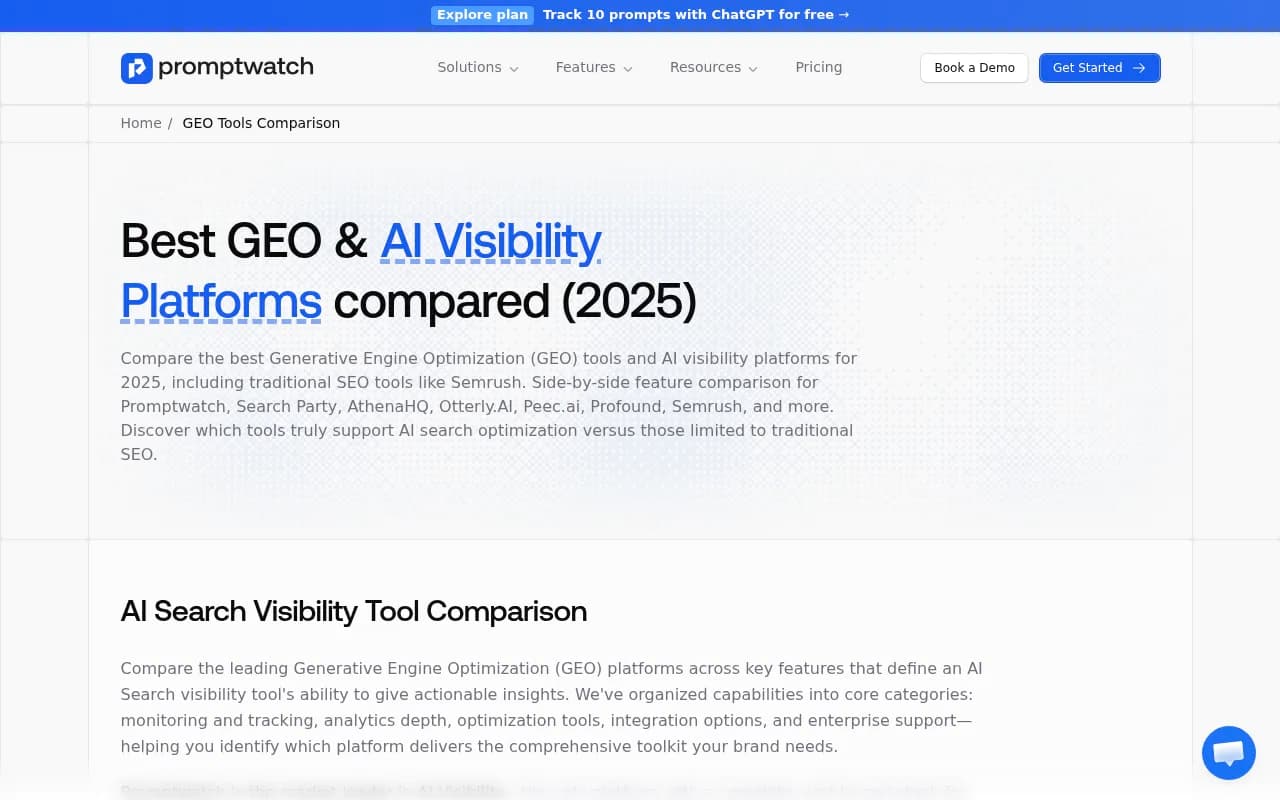
The GEO platform space got crowded fast in 2025. A comparison of 12 platforms -- including Profound, Promptwatch, Otterly.AI, Peec.ai, AthenaHQ, Search Party, Semrush, and Ahrefs Brand Radar -- found Promptwatch as the only platform rated as a "Leader" across all evaluation categories. Profound scored well on analytics depth but fell short on optimization capabilities.
Independent reviewers noted the same pattern. ContentMonk's deep-dive on Profound alternatives described Promptwatch as having a "core differentiator" in tracking 9+ LLM platforms with an end-to-end workflow. The consistent theme: Profound is excellent at showing you the problem; Promptwatch is built to help you solve it.
That said, some teams found Profound's enterprise dashboards easier to present to senior stakeholders who aren't deep in the GEO weeds. There's real value in a polished executive-facing report, and Profound does that well.
Which team should use which platform
This isn't a case where one tool is objectively better for everyone. The right choice depends on your situation.
Profound makes sense if:
- You're at a large enterprise with a dedicated content team that just needs visibility data
- Your primary use case is competitive intelligence and executive reporting
- You have budget for a premium tool and don't need content generation built in
- You're already using a separate content workflow and just need the monitoring layer
Promptwatch makes sense if:
- Your team needs to both identify gaps and create content to fill them
- You want to understand how AI crawlers are actually interacting with your site
- You're tracking Reddit and YouTube as citation sources (you should be)
- You need to connect AI visibility to actual traffic and revenue
- You're a mid-market team or agency that needs strong capability without enterprise pricing
- You want to monitor across 10 AI models including newer ones like Grok and DeepSeek
For most marketing and SEO teams in 2026, the bottleneck isn't "we don't have enough data." It's "we have data but don't know what to do with it." That's where Promptwatch's action loop -- find gaps, generate content, track results -- addresses something Profound doesn't.
A note on the broader competitive landscape
Profound and Promptwatch aren't the only options. The market now includes tools like Otterly.AI and Peec.ai at the budget end, AthenaHQ for monitoring-focused teams, and Scrunch for brands with larger budgets. Most of these tools share Profound's limitation: they're dashboards, not optimization platforms.



If you're evaluating alternatives to either platform, the key question to ask is: after I see the data, what does this tool help me do about it? Most platforms answer that question with silence. Promptwatch answers it with content generation, crawler diagnostics, and traffic attribution.
The bottom line
Profound is a legitimate enterprise tool with real strengths in analytics and competitive tracking. If you're a large brand with a content team already in place and you mainly need visibility data, it's worth evaluating.
But for most teams in 2026, monitoring alone isn't the constraint. The constraint is the gap between "we know we're invisible" and "we've published content that gets cited." Promptwatch is built specifically to close that gap -- and in a market where most tools stop at step one, that matters.
Promptwatch offers a free trial, so you can test the Answer Gap Analysis and content generation against your actual category before committing. That's probably the most useful thing you can do before making a decision either way.