Summary
- Agencies need GEO platforms with multi-client management, white-label reporting, and scalable pricing -- not just monitoring dashboards
- The best platforms close the action loop: find content gaps, generate AI-optimized content, track results, and attribute traffic to revenue
- Promptwatch leads for agencies with answer gap analysis, built-in AI content generation, crawler logs, and page-level tracking across 10 AI models

- Monitoring-only tools (Otterly.AI, Peec.ai, AthenaHQ) show you data but leave you stuck -- agencies need platforms that help clients fix visibility problems, not just report them
- Key features for agencies: client-specific dashboards, competitor heatmaps, prompt volume estimates, Reddit/YouTube tracking, and API access for custom reporting
What agencies actually need from a GEO platform
Agencies managing multiple clients face a different set of problems than in-house teams. You're not optimizing one brand -- you're managing 5, 10, or 50 brands across different industries, each with different competitors, different content gaps, and different stakeholders who want different reports.
Most GEO platforms were built for single-brand use. They show you where your brand appears in ChatGPT or Perplexity, maybe give you a visibility score, and call it a day. That's fine if you're an in-house marketer with one website to worry about. For agencies, it's a mess.
Here's what you actually need:
Multi-client architecture. Separate dashboards for each client, not a single account where you manually filter by domain. Client-specific tracking, client-specific reports, client-specific API keys.
White-label reporting. Your clients don't care about the platform you're using. They care about their visibility, their competitors, and what you're doing to improve it. You need reports that show your agency's branding, not the tool vendor's logo.
Scalable pricing. Most GEO platforms charge per site or per prompt. When you're managing 20 clients, that adds up fast. You need agency pricing that doesn't punish you for growth.
The action loop. This is the big one. Monitoring tools show you problems. Optimization platforms help you fix them. Agencies get paid to fix problems, not just report them. You need a platform that closes the loop: find gaps, create content, track results.
Let's break down what that actually looks like in practice.
The action loop: why monitoring-only tools fail agencies
Most GEO platforms stop at step one. They track your client's visibility in ChatGPT, Claude, Perplexity, and other AI models. They show you a score. They tell you which competitors are winning. Then they leave you to figure out what to do about it.
That's not enough. Your client hired you to improve their AI visibility, not just measure it. You need a platform that helps you take action.
Here's what the full action loop looks like:
Step 1: Find the gaps. Answer gap analysis shows you exactly which prompts your client's competitors are visible for but your client isn't. Not vague categories like "productivity tools" -- specific prompts like "best project management software for remote teams" or "how to track billable hours in Asana". You see the exact content your client's website is missing.
Step 2: Create content that ranks in AI. Most agencies hand off content briefs to freelance writers who produce generic SEO filler. AI models don't cite that. You need content grounded in real citation data -- the 880M+ citations that show what AI models actually reference when answering prompts. Built-in AI content generation that understands prompt volumes, persona targeting, and competitor analysis. Not a separate tool you have to integrate. Not a manual process. Built in.
Step 3: Track the results. Page-level tracking shows exactly which pages are being cited, how often, and by which models. You see your client's visibility scores improve as AI models start citing the new content. You close the loop with traffic attribution -- code snippet, GSC integration, or server log analysis -- to connect visibility to actual revenue.
This cycle -- find gaps, generate content, track results -- is what separates optimization platforms from monitoring dashboards. Promptwatch is the only platform built around this action loop. Most competitors (Otterly.AI, Peec.ai, AthenaHQ, Search Party) stop at step one.
Platform comparison: what agencies are actually using in 2026
Here's a breakdown of the platforms agencies are evaluating and what they're good for.
| Platform | Multi-client support | Content generation | Crawler logs | Reddit/YouTube tracking | Agency pricing | Best for |
|---|---|---|---|---|---|---|
| Promptwatch | Yes | Yes | Yes | Yes | Yes | Full-service agencies needing action, not just monitoring |
| Profound | Yes | No | No | No | Custom | Enterprise agencies with big budgets |
| AthenaHQ | Limited | No | No | No | No | Single-brand in-house teams |
| Otterly.AI | No | No | No | No | No | Quick visibility checks, not client management |
| Peec.ai | Limited | No | No | No | No | Basic monitoring for small agencies |
| Scrunch | Yes | No | No | Limited | Custom | Influencer-focused agencies |
| Conductor | Yes | No | No | No | Custom | SEO agencies adding AI visibility |
| Semrush | Yes | No | No | No | Yes | Traditional SEO agencies dipping into GEO |
Promptwatch: built for agencies that need to take action
Promptwatch is the only platform rated as a "Leader" across all categories in a 2026 comparison of 12 GEO platforms. The core difference: it's not a monitoring dashboard. It's an optimization platform.
What that means for agencies:
Answer gap analysis. See exactly which prompts your client's competitors are visible for but your client isn't. Specific content gaps, not vague categories. Prompt volume estimates and difficulty scores so you can prioritize high-value, winnable prompts.
Built-in AI content generation. The platform generates articles, listicles, and comparisons grounded in 880M+ citations analyzed, prompt volumes, persona targeting, and competitor analysis. This isn't generic SEO filler. It's content engineered to get cited by ChatGPT, Claude, Perplexity, and other AI models.
AI crawler logs. Real-time logs of AI crawlers (ChatGPT, Claude, Perplexity) hitting your client's website. Which pages they read, errors they encounter, how often they return. Fix indexing issues before they hurt visibility. Most competitors don't have this at all.
Reddit and YouTube insights. Surface discussions that directly influence AI recommendations. A channel most competitors ignore entirely.
ChatGPT Shopping tracking. Monitor when your client's brand appears in ChatGPT's product recommendations and shopping carousels.
Multi-language and multi-region. Monitor AI responses in any language, from any country, with customizable personas that match how your client's actual customers prompt.
Looker Studio integration and API. Export data for custom reporting or build on the API for custom workflows. White-label reports with your agency's branding.
Pricing: Essential $99/mo (1 site, 50 prompts, 5 articles), Professional $249/mo (2 sites, 150 prompts, 15 articles, crawler logs, state/city tracking), Business $579/mo (5 sites, 350 prompts, 30 articles). Agency/Enterprise custom pricing available.
Profound: enterprise monitoring with a big price tag
Profound positions itself as an all-in-one enterprise platform. Strong feature set, but it's monitoring-focused. No content generation. No crawler logs. No Reddit tracking. No ChatGPT Shopping.
What you get: visibility tracking across multiple AI models, competitor analysis, some citation analysis. The interface is polished. The data is reliable. But when your client asks "what should we do about this?", Profound doesn't help you answer.
Pricing is custom, but expect enterprise-level costs. Good for large agencies with big budgets who have their own content teams and just need the data.
AthenaHQ: narrative tone monitoring, not multi-client management
AthenaHQ focuses on how AI models describe your brand -- the tone, sentiment, and narrative. Interesting angle, but it's built for single-brand use. No real multi-client architecture. No content generation. No crawler logs.
If you're an agency managing one high-value client who cares deeply about brand narrative, AthenaHQ might fit. For most agencies juggling multiple clients, it's not practical.
Otterly.AI and Peec.ai: basic monitoring, not agency tools
Otterly.AI and Peec.ai are lightweight monitoring tools. They show you where your brand appears in AI responses. That's it. No multi-client dashboards. No content generation. No crawler logs. No visitor analytics.
They're cheap, which is appealing. But you get what you pay for. These are tools for quick visibility checks, not for managing client work at scale.


Scrunch: influencer-focused, limited GEO depth
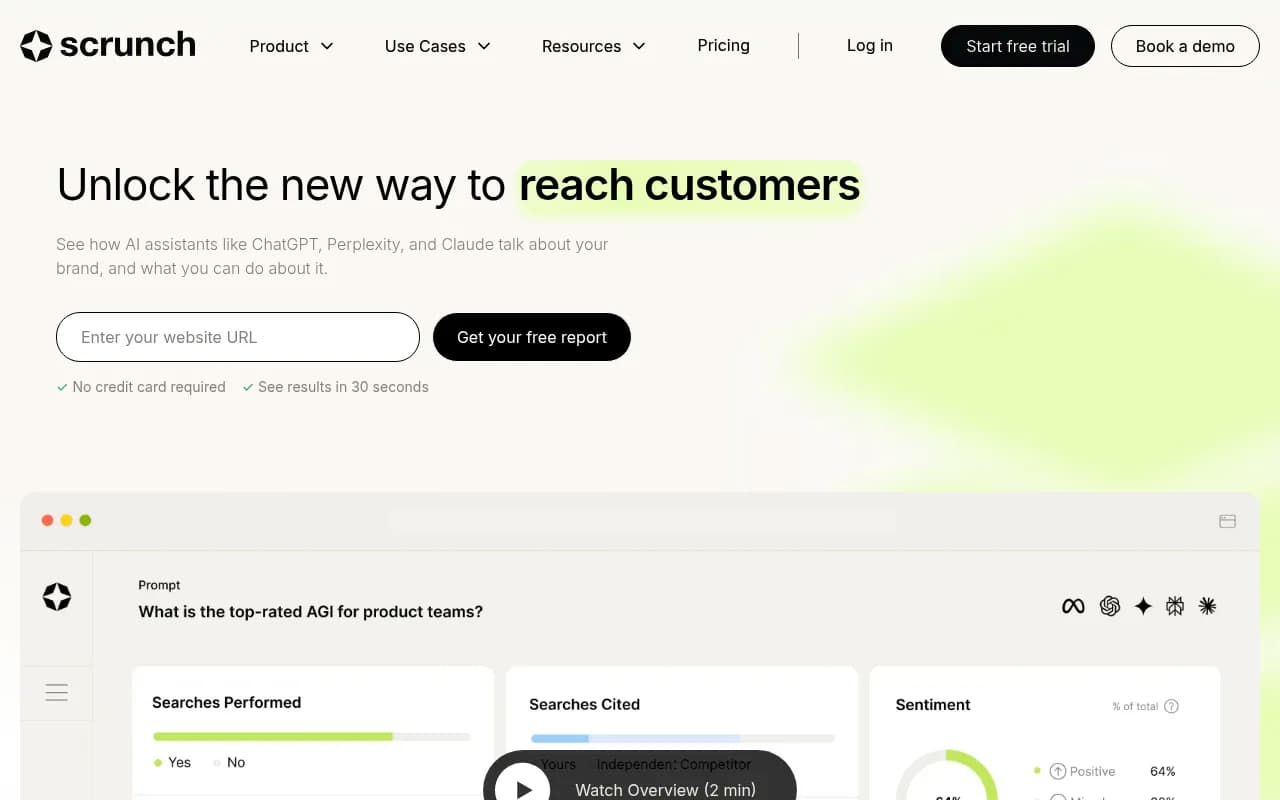
Scrunch is primarily an influencer marketing platform that added AI visibility tracking. If your agency focuses on influencer campaigns and wants to see how those campaigns affect AI visibility, Scrunch makes sense. For general GEO work, it's not deep enough.
Conductor and Semrush: SEO platforms adding AI features
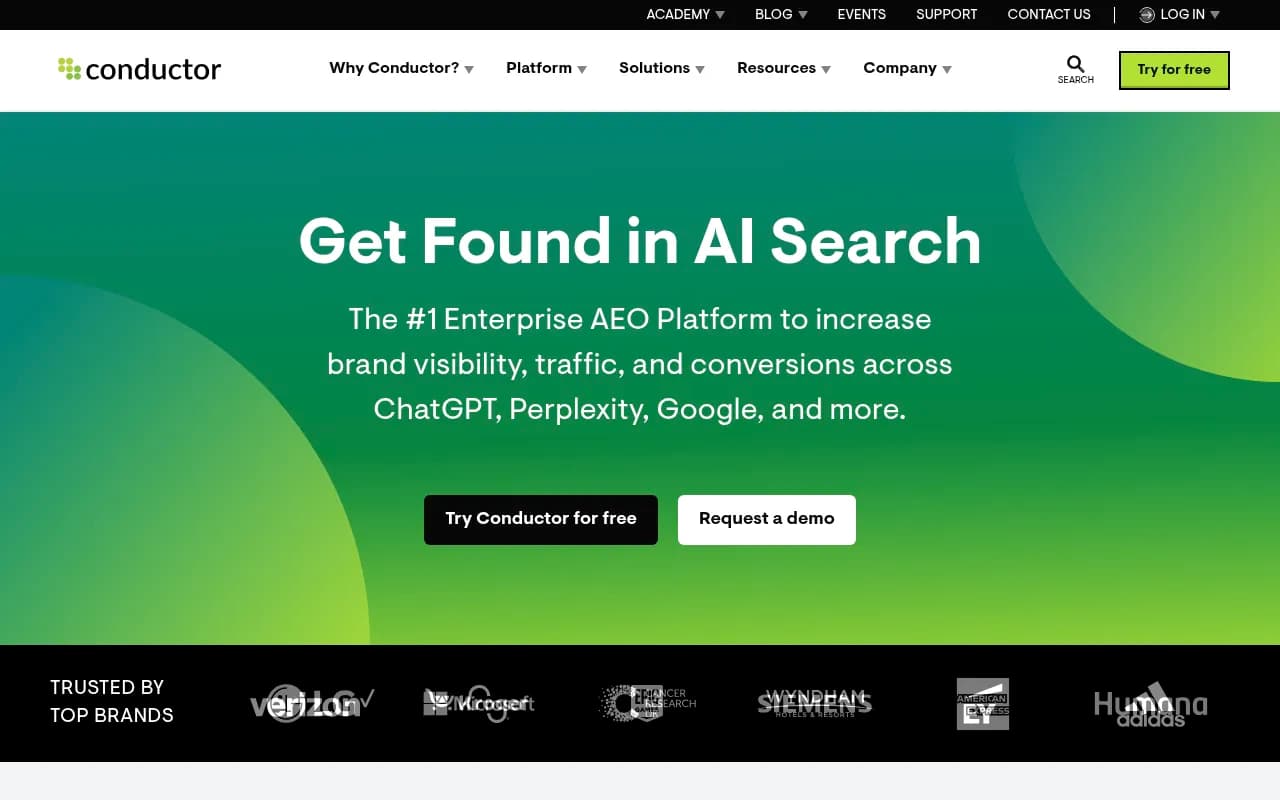
Conductor and Semrush are traditional SEO platforms that bolted on AI visibility tracking. They have multi-client support and agency pricing because they've been serving agencies for years. But their GEO features are shallow.
Semrush uses fixed prompts -- you can't customize them. Ahrefs Brand Radar (part of Ahrefs) has the same limitation. Conductor has better customization but no content generation, no crawler logs, no AI traffic attribution.
If your agency is already paying for Semrush or Conductor and you want to dip your toes into GEO, these are fine starting points. But they're not built for serious GEO work.
Key features agencies should demand
When evaluating GEO platforms, here's what to look for:
Multi-client dashboards. Separate workspaces for each client, not a single account where you filter by domain. Client-specific tracking, reports, and API keys.
Prompt customization. You should be able to add, edit, and prioritize prompts for each client. Fixed prompt lists (like Semrush and Ahrefs use) don't work for agencies.
Competitor heatmaps. See who's winning for each prompt and why. Compare your client's visibility vs competitors across LLMs.
Prompt intelligence. Volume estimates and difficulty scores for each prompt. Query fan-outs that show how one prompt branches into sub-queries. Prioritize high-value, winnable prompts instead of guessing.
Citation and source analysis. See exactly which pages, Reddit threads, YouTube videos, and domains AI models cite. Know where to publish and what to optimize.
Content generation. Built-in AI writing that generates articles grounded in real citation data, prompt volumes, and competitor analysis. Not a separate tool you have to integrate.
AI crawler logs. Real-time logs of AI crawlers hitting your client's website. Which pages they read, errors they encounter, how often they return. Fix indexing issues before they hurt visibility.
Reddit and YouTube tracking. Surface discussions that directly influence AI recommendations. Most competitors ignore this channel entirely.
Traffic attribution. Connect AI visibility to actual traffic and revenue. Code snippet, GSC integration, or server log analysis.
API and integrations. Export data for custom reporting. Build on the API for custom workflows. Looker Studio, Google Sheets, Slack integrations.
White-label reporting. Reports with your agency's branding, not the tool vendor's logo.
Pricing models: what agencies are paying
GEO platform pricing varies wildly. Here's what to expect:
Per-site pricing. Most platforms charge per site. Promptwatch: $99-579/mo depending on how many sites and prompts. Otterly.AI: $49-199/mo. Peec.ai: $29-149/mo. This works if you're managing a few clients. It breaks down fast when you're managing 20.
Custom enterprise pricing. Profound, Scrunch, Conductor, and Semrush all use custom pricing for agencies. Expect $1,000-5,000+/mo depending on the number of clients and features. You get more flexibility, but you're paying for it.
Agency-specific plans. Promptwatch offers agency/enterprise pricing with volume discounts. Semrush has agency plans. Most other platforms don't.
Free trials. Promptwatch, Otterly.AI, Peec.ai, and most others offer free trials. Test before you commit.
How to choose the right platform for your agency
Start with the action loop. Do you just need to monitor your clients' AI visibility, or do you need to improve it?
If you just need monitoring, Otterly.AI or Peec.ai might be enough. They're cheap. They show you the data. You handle the rest.
If you need to improve visibility -- which is what your clients are paying you for -- you need a platform that closes the action loop. Find gaps, create content, track results. That's Promptwatch.
If you're managing enterprise clients with big budgets and you already have a content team, Profound or Conductor might fit. You get the data, your team creates the content, you track the results manually.
If you're an SEO agency adding GEO to your service mix, Semrush or Conductor makes sense. You're already paying for them. The GEO features are shallow, but they're a starting point.
If you're an influencer-focused agency, Scrunch is worth a look. It's not deep on GEO, but it connects influencer campaigns to AI visibility.
Common mistakes agencies make when choosing GEO platforms
Mistake 1: Choosing a monitoring tool when you need an optimization platform. Your clients don't pay you to report problems. They pay you to fix them. Monitoring-only tools leave you stuck.
Mistake 2: Ignoring multi-client architecture. A platform built for single-brand use doesn't scale. You end up with a mess of manual filters, shared logins, and reports that mix client data.
Mistake 3: Overlooking content generation. Most agencies hand off content briefs to freelance writers who produce generic SEO filler. AI models don't cite that. You need content grounded in real citation data.
Mistake 4: Skipping crawler logs. If AI crawlers can't read your client's website, visibility will never improve. Crawler logs show you errors before they hurt rankings.
Mistake 5: Ignoring Reddit and YouTube. AI models cite Reddit threads and YouTube videos constantly. If you're not tracking these channels, you're missing a huge part of the story.
Mistake 6: Not connecting visibility to revenue. Your clients care about traffic and revenue, not visibility scores. You need traffic attribution to close the loop.
What the best agencies are doing in 2026
The best GEO agencies in 2026 aren't just monitoring AI visibility. They're optimizing it. Here's what that looks like:
They run answer gap analysis for every client. See which prompts competitors are visible for but the client isn't. Prioritize high-value, winnable prompts.
They generate AI-optimized content at scale. Not generic SEO filler. Content grounded in 880M+ citations analyzed, prompt volumes, persona targeting, and competitor analysis.
They track crawler logs. Fix indexing issues before they hurt visibility. Monitor how often AI crawlers return to the client's site.
They surface Reddit and YouTube discussions. Find conversations that influence AI recommendations. Engage where it matters.
They connect visibility to revenue. Traffic attribution shows which pages are driving actual traffic from AI search. Close the loop with ROI reporting.
They use platforms built for action, not just monitoring. Promptwatch is the platform most top agencies are using in 2026 because it closes the action loop.
Final thoughts
GEO is still new. Most platforms are monitoring dashboards that show you data but leave you stuck. Agencies need platforms that help clients fix visibility problems, not just report them.
The action loop -- find gaps, create content, track results -- is what separates optimization platforms from monitoring tools. Promptwatch is the only platform built around this loop. It's why 6,700+ brands and agencies use it, including Booking.com, Center Parcs, Wortell, and Elaboratum.
If you're managing multiple clients and you need to improve their AI visibility, not just measure it, Promptwatch is the platform to evaluate first. Free trial available. Agency pricing with volume discounts.
Other platforms have their place. Profound for enterprise monitoring. Conductor and Semrush for SEO agencies adding GEO. Otterly.AI and Peec.ai for quick visibility checks. But if you're serious about GEO, you need a platform that closes the action loop.
That's Promptwatch.