Key takeaways
- Most AI visibility tools only track 3-5 LLMs, leaving major blind spots across Grok, DeepSeek, Mistral, and Meta AI
- Full 10-model coverage is rare -- only a handful of platforms genuinely monitor all the major LLMs simultaneously
- Coverage alone isn't enough: the best platforms combine monitoring with content gap analysis and optimization to actually improve your visibility
- Pricing ranges from $29/month for basic monitoring to custom enterprise tiers for full-coverage platforms
- Promptwatch is the only platform rated a "Leader" across all evaluation categories in 2026, covering all 10 LLMs with built-in content generation and crawler analytics
Your SEO rankings look fine. Traffic is holding steady. But somewhere right now, a buyer just asked Perplexity to recommend the best tools in your category -- and your brand didn't come up. Then they asked Grok. Same result. Then DeepSeek. Still nothing.
That's the problem with the AI visibility space in 2026: most tools were built when "AI search" meant ChatGPT and maybe Perplexity. The landscape has since expanded to ten distinct models, each with its own citation behavior, training data, and answer format. A brand that's well-cited in ChatGPT can be completely invisible in Gemini or Meta AI -- and without cross-model monitoring, you'd never know.
This guide breaks down which platforms actually cover all 10 major LLMs, what separates monitoring-only tools from optimization platforms, and how to choose the right one for your situation.
Why tracking all 10 LLMs actually matters
It's tempting to focus on ChatGPT and call it a day. ChatGPT has the largest user base, and Perplexity is the go-to for research-heavy queries. But the reality is messier.
Only 11% of domains are cited by both ChatGPT and Perplexity, according to a 2026 multi-source analysis. That means the overlap between models is surprisingly small. A competitor could be dominating Gemini recommendations while you're winning on Perplexity -- and you'd have no idea unless you're tracking both.
Here's why each model matters:
- ChatGPT handles the highest volume of consumer and B2B research queries. Product comparisons, vendor shortlists, "best X for Y" questions -- ChatGPT is where buyers start.
- Perplexity cites sources aggressively and is popular with researchers and technical buyers. Citation here often drives direct traffic.
- Google AI Overviews and Google AI Mode sit at the top of Google search results. Visibility here directly affects organic click-through rates.
- Gemini is integrated into Google Workspace and Android. Enterprise buyers encounter it constantly.
- Claude is the preferred model for many agencies, consultants, and power users doing deep research.
- Grok is embedded in X (formerly Twitter) and reaches a different audience than the others.
- DeepSeek has grown rapidly in Asia-Pacific markets and among cost-conscious developers.
- Copilot is embedded in Microsoft 365, meaning it reaches enterprise users during their actual workflow.
- Meta AI is integrated into WhatsApp, Instagram, and Facebook -- consumer touchpoints most B2B tools ignore entirely.
- Mistral powers a growing number of European enterprise deployments and API-first applications.
If your brand only appears in two or three of these, you're invisible to a significant portion of your potential buyers.
What to look for in a full-coverage AI visibility platform
Before comparing specific tools, it helps to know what actually separates a serious platform from a basic monitoring dashboard.
LLM coverage breadth: Does it actually query all 10 models, or does it claim coverage but only track 3-4 in practice? Some tools list models they support "in beta" or only at enterprise tiers.
Real UI vs. API tracking: This matters more than most people realize. AI models behave differently in their user-facing interfaces than through their APIs. A tool that only pings the API may miss shopping recommendations, featured citations, and answer formats that real users actually see.
Prompt flexibility: Can you define your own prompts, or are you stuck with fixed templates? Fixed prompts are easier to set up but miss the long-tail queries where your competitors might be winning.
Content gap analysis: Knowing you're invisible is step one. Knowing why -- which specific topics and questions your site doesn't answer -- is what lets you fix it.
Crawler and citation analytics: Which of your pages are AI models actually reading? Which are getting cited? This data is essential for prioritizing content work.
Traffic attribution: Can you connect AI visibility to actual website visits and revenue? Without this, you're optimizing for a metric that may or may not affect your business.
The full LLM coverage comparison table
Here's how the major platforms stack up on model coverage, based on publicly available information as of mid-2026:
| Platform | ChatGPT | Perplexity | Google AI Overviews | Google AI Mode | Claude | Gemini | Grok | DeepSeek | Copilot | Meta AI | Mistral | Content generation | Crawler logs |
|---|---|---|---|---|---|---|---|---|---|---|---|---|---|
| Promptwatch | Yes | Yes | Yes | Yes | Yes | Yes | Yes | Yes | Yes | Yes | Yes | Yes | Yes |
| Profound | Yes | Yes | Yes | Yes | Yes | Yes | Yes | Yes | Yes | Yes | Partial | No | No |
| Peec AI | Yes | Yes | Yes | Partial | Yes | Yes | Partial | Partial | Yes | Partial | No | No | No |
| SE Visible | Yes | Yes | Yes | No | Yes | Yes | No | No | Yes | No | No | No | No |
| Otterly.AI | Yes | Yes | Yes | No | Yes | No | No | No | No | No | No | No | No |
| Semrush AI Toolkit | Yes | Yes | Yes | No | No | Yes | No | No | No | No | No | No | No |
| AthenaHQ | Yes | Yes | Yes | No | Yes | Yes | Yes | Yes | Yes | No | No | No | No |
| Nightwatch | Yes | Yes | Yes | No | Yes | No | No | No | No | No | No | No | No |
| Searchable | Yes | Yes | Yes | No | Yes | Yes | No | No | Yes | No | No | Yes | No |
| Ahrefs Brand Radar | Yes | Yes | Yes | No | No | Yes | No | No | No | No | No | No | No |
Coverage data based on publicly available feature pages and documentation as of July 2026. "Partial" indicates beta or limited support.
The platforms worth considering
Promptwatch
Promptwatch is the most complete platform in this space right now. It monitors all 10 LLMs -- including Mistral and Meta AI, which most competitors skip entirely -- and does it through real user interfaces rather than just API calls. That distinction matters because the answers users actually see can differ from what the API returns.
What separates Promptwatch from the monitoring-only crowd is what happens after you see the data. The Answer Gap Analysis shows exactly which prompts competitors are visible for but you're not. Content Agents then generate articles, listicles, and comparisons grounded in that prompt data -- not generic SEO filler, but content engineered to fill the specific gaps AI models are exposing. And AI Crawler Logs show in real time which of your pages AI crawlers are reading, how often they return, and when a crawled page moves to an actual citation.
That full loop -- find gaps, create content, track results -- is what makes it an optimization platform rather than a dashboard.
Pricing starts at $99/month for the Essential plan (1 site, 50 prompts, 5 articles), $249/month for Professional (2 sites, 150 prompts, 15 articles, crawler logs), and $579/month for Business (5 sites, 350 prompts, 30 articles). Agency and enterprise pricing is available.

Profound
Profound is a strong enterprise option with broad LLM coverage. It tracks up to 10 AI engines at enterprise tier and has solid prompt research capabilities. The interface is well-designed and the data quality is generally reliable.
The main limitation is that Profound is primarily a monitoring platform. It shows you where you stand but doesn't help you do much about it -- no content generation, no crawler logs, no content gap analysis that feeds directly into a creation workflow. For teams that already have strong content operations and just need the data layer, that's fine. For teams that want the full loop, it's a gap.
Pricing starts at $99/month.

Peec AI
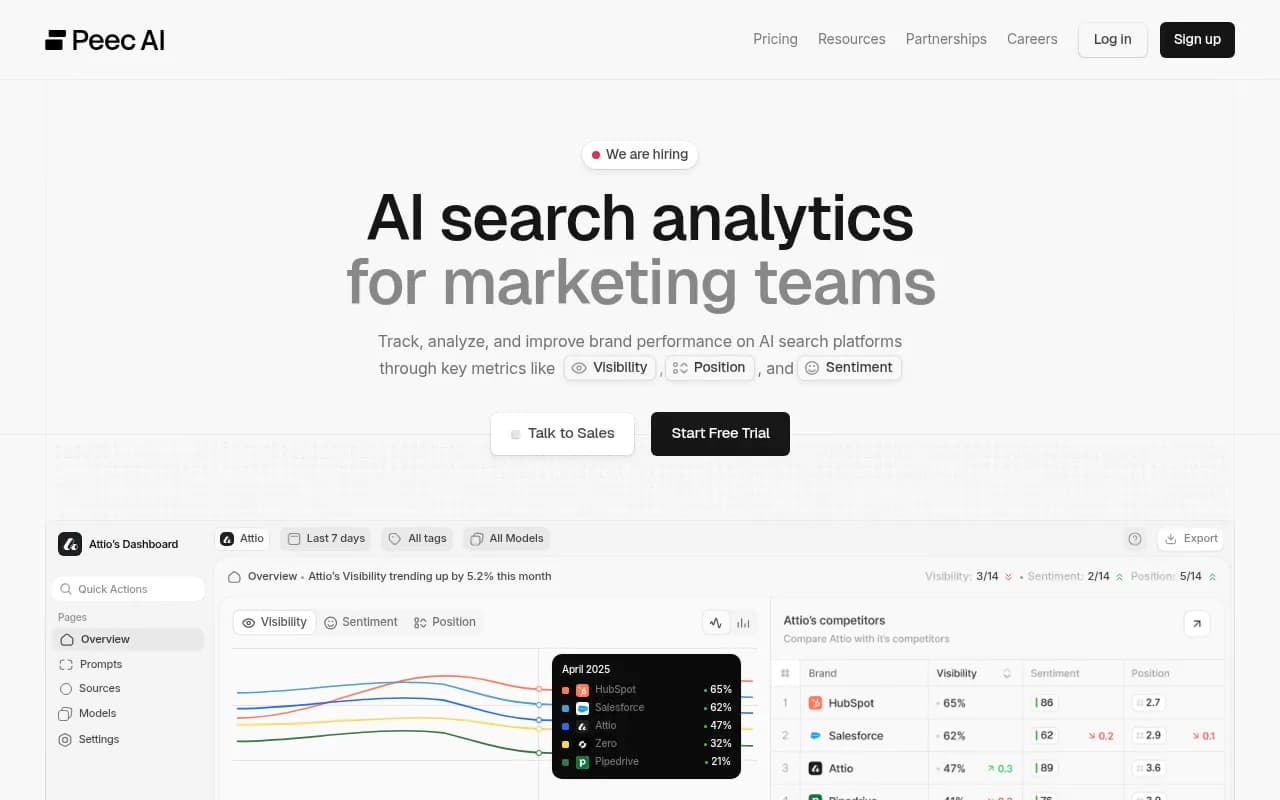
Peec AI offers flexible model selection and multi-language support, which makes it useful for brands operating across multiple markets. Coverage extends to most major LLMs, though some (Grok, DeepSeek, Meta AI) are partial or in beta.
It's a monitoring-focused tool. No content generation, no crawler analytics. But the flexibility in model selection and the multi-language support are genuine differentiators for international teams.
AthenaHQ
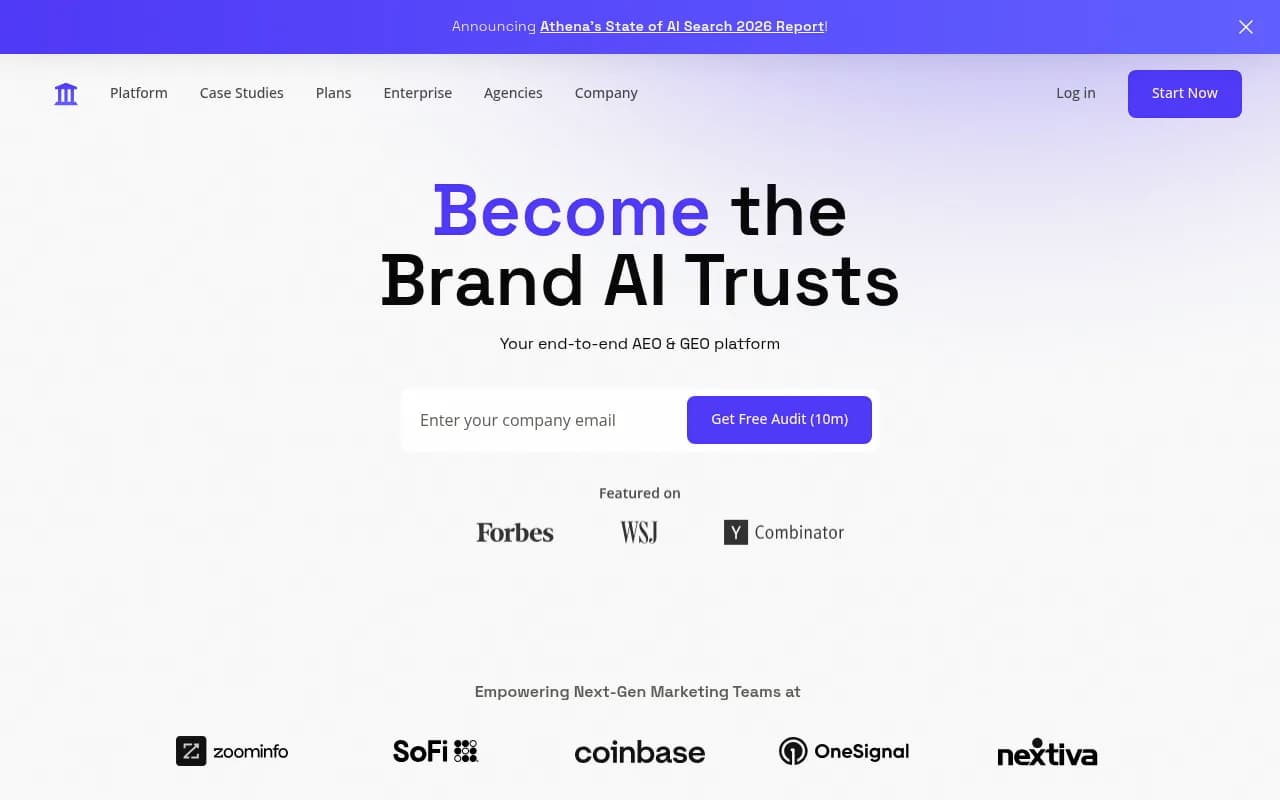
AthenaHQ covers 8+ AI search engines and has a clean interface for tracking brand visibility. It's monitoring-focused -- no content optimization or generation capabilities -- but the coverage is broader than most mid-market tools.
SE Visible
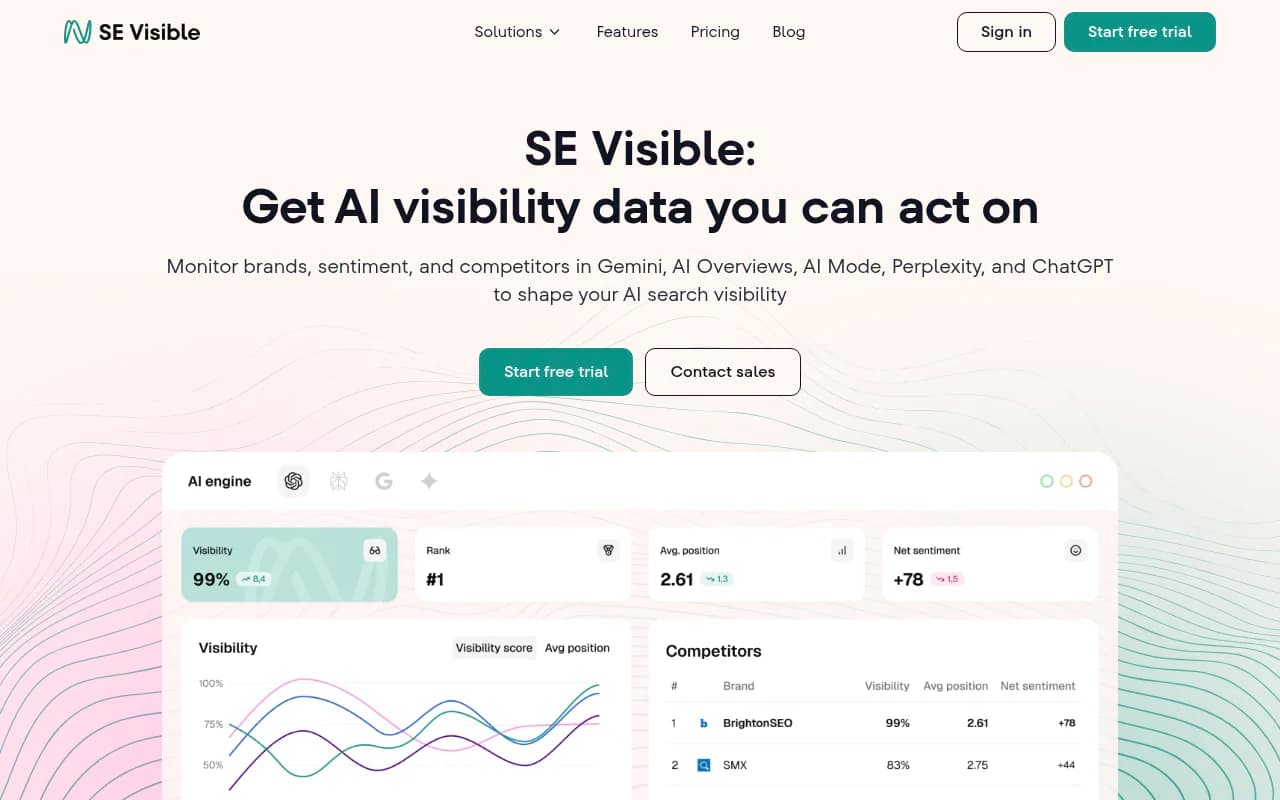
SE Visible (from SE Ranking) covers 5 models and is a reasonable option for teams already using SE Ranking for traditional SEO. The integration with existing SEO workflows is the main draw. Coverage gaps on Grok, DeepSeek, Mistral, and Meta AI are significant if those models matter to your audience.
Otterly.AI
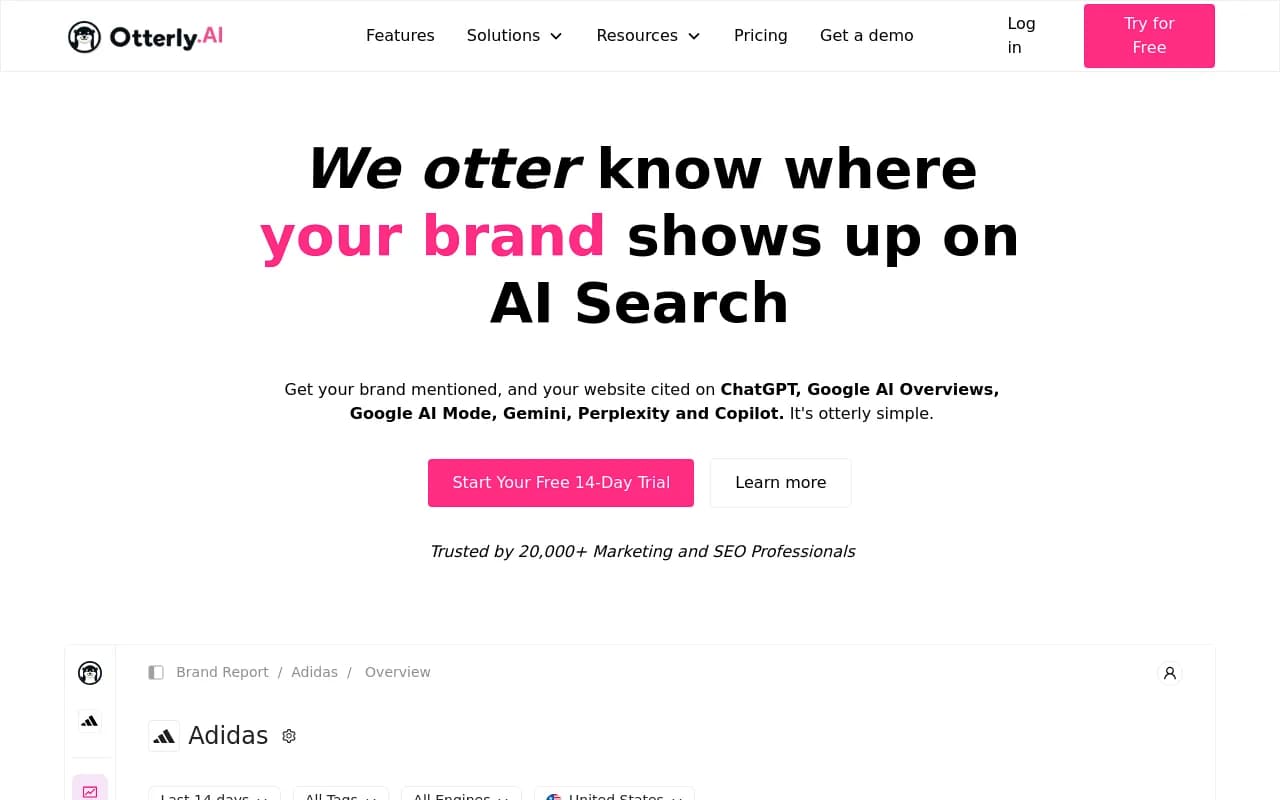
Otterly.AI is the most affordable entry point in the category at $29/month. It covers 4 models (ChatGPT, Perplexity, Google AI Overviews, Claude) and is genuinely useful for small teams that just want to start tracking AI visibility without a big commitment. The coverage limitations are real, but for a first step, it's hard to argue with the price.
Semrush AI Toolkit
If you're already paying for Semrush, the AI Toolkit is worth enabling. It covers 5 models and integrates with your existing keyword and competitor data. The limitation is that it uses fixed prompts rather than custom ones, which means you can't track the specific questions your buyers are actually asking. It's a supplement to a full AI visibility platform, not a replacement.
Nightwatch
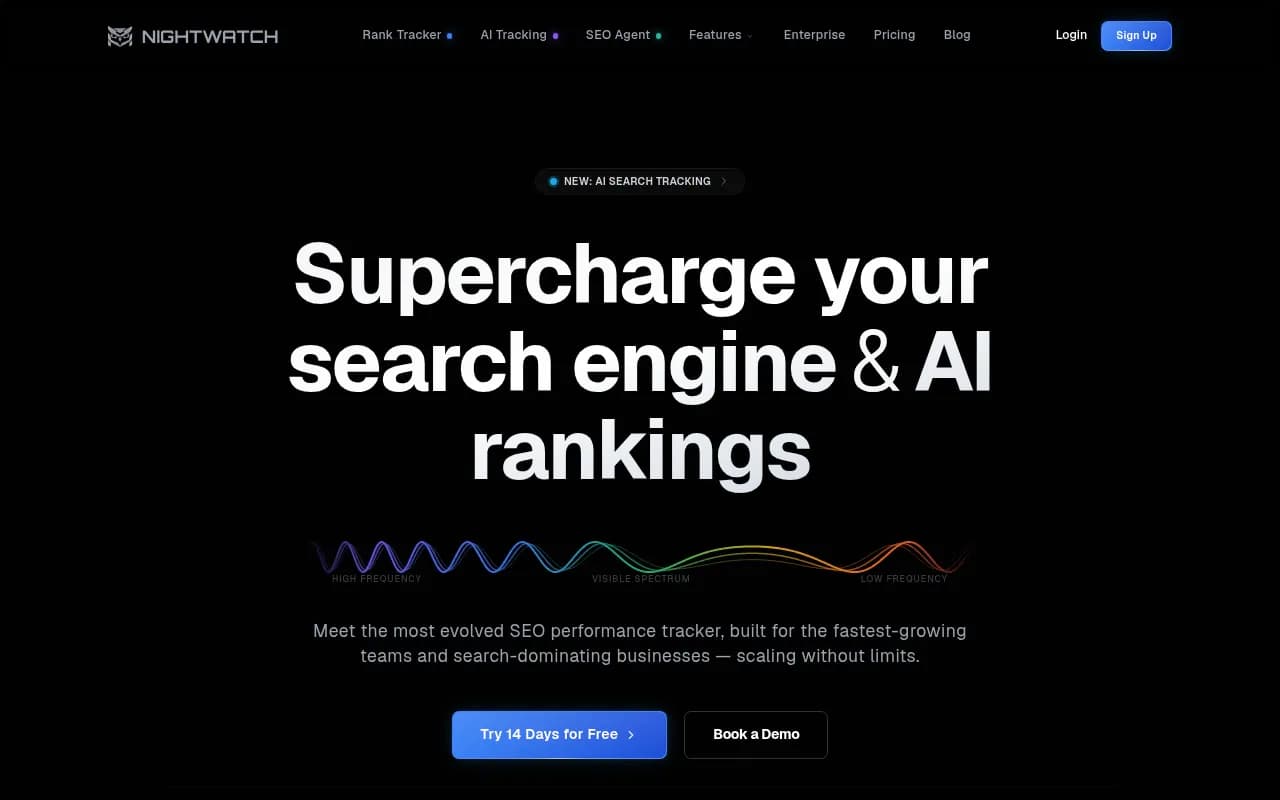
Nightwatch combines traditional rank tracking with AI search monitoring, covering 4 LLMs via an add-on. The appeal is consolidation -- one tool for Google rankings and AI visibility. The coverage is limited compared to dedicated platforms, but for smaller teams that don't need deep AI analytics, it's a practical choice.
Searchable
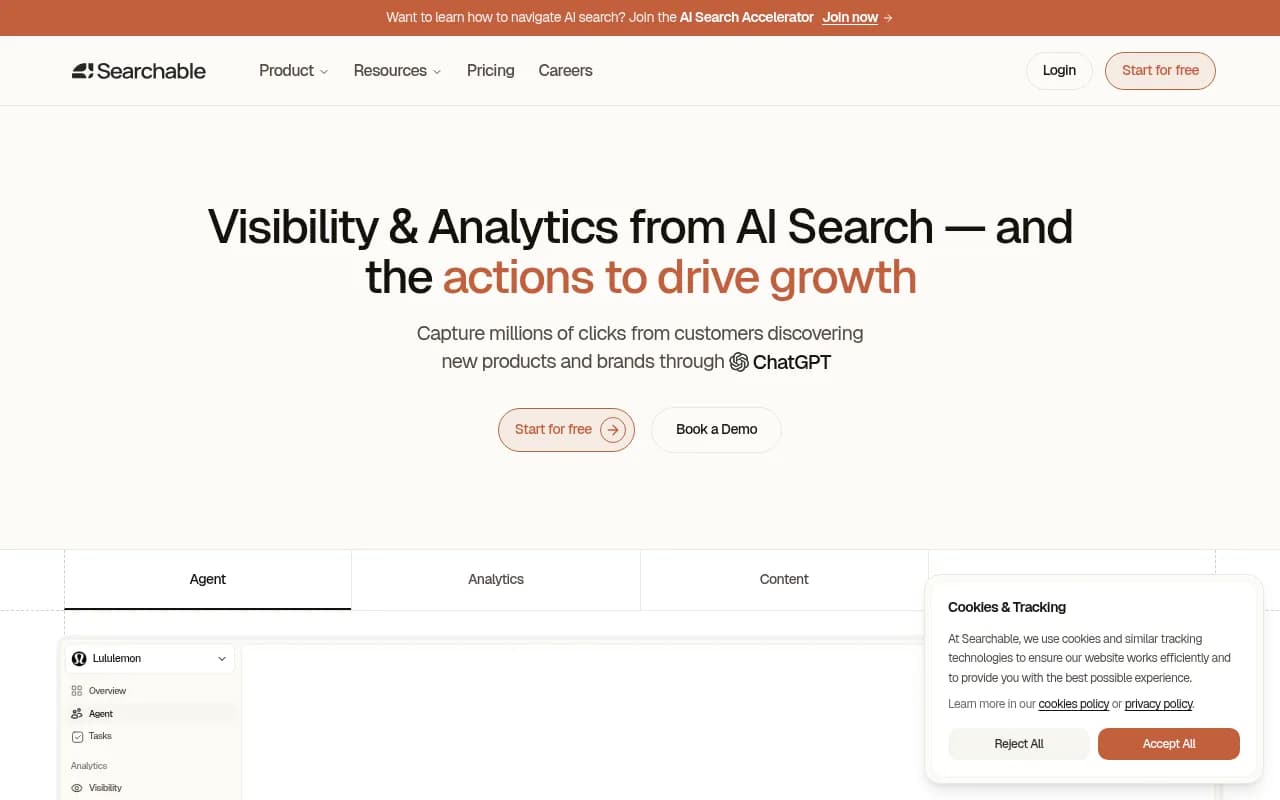
Searchable covers up to 7 models and includes some content creation capabilities, making it one of the few mid-market tools that tries to go beyond monitoring. Coverage of Grok, DeepSeek, and Meta AI is limited, but for teams focused on the core 5-6 models, it's a reasonable option.
The monitoring-only trap
Here's the thing about most AI visibility tools: they're good at telling you what's happening and not much else. You get a dashboard showing your brand mention rate across models, a competitor comparison, maybe some sentiment analysis. Then what?
The gap between "I can see I'm invisible in Claude" and "I know what content to create to fix that" is where most platforms leave you stranded. You're looking at data without a clear path to action.
This is the core difference between monitoring platforms and optimization platforms. Monitoring tells you the score. Optimization helps you change it.
The tools that bridge this gap -- Promptwatch being the clearest example -- combine the data layer with content gap analysis and actual content generation. You can see which prompts competitors are winning, understand what content is missing from your site, generate that content, publish it, and then watch the citation data to see if it worked. That's a complete workflow.
Most competitors stop at step one.
How to choose the right platform for your situation
If you're just starting out and want to understand your AI visibility baseline: Otterly.AI or Nightwatch give you a low-cost entry point. You'll get data on the 4 most important models without a major budget commitment.
If you need broad coverage across all 10 LLMs and have a content team ready to act on the data: Promptwatch is the clear choice. The full-coverage monitoring combined with content generation and crawler logs gives you everything you need to actually move the needle.
If you're an enterprise team that primarily needs data and already has content operations in place: Profound is worth evaluating. Strong data quality, broad coverage at enterprise tier, clean interface.
If you're an international brand tracking visibility across multiple languages and markets: Peec AI's multi-language support and flexible model selection are worth the tradeoff on coverage depth.
If you're already deep in the Semrush or SE Ranking ecosystem: Use the built-in AI toolkits as a starting point, but plan to graduate to a dedicated platform as AI search becomes a bigger part of your traffic mix.
What the data actually shows about multi-model tracking
One finding from Promptwatch's dataset of 4.5 billion citations processed: citation patterns vary dramatically across models. A brand that ranks well in ChatGPT responses may be cited half as often in Perplexity, and barely at all in Gemini. This isn't random -- it reflects differences in training data, retrieval mechanisms, and the types of sources each model prefers.
This means that optimizing for one model doesn't automatically improve your standing in others. You need model-specific data to understand where the gaps are and what content changes would actually help.
It also means that share-of-voice numbers can be misleading if they're averaged across models. A 40% share of voice that's mostly ChatGPT looks very different from a 40% share that's evenly distributed across all 10 models.
The bottom line
The AI visibility space has matured enough that "we track AI search" is no longer a differentiator. The question is which models, how deeply, and what you can actually do with the data.
For teams serious about AI search visibility in 2026, full 10-model coverage is the baseline requirement. Beyond that, the platforms that combine monitoring with content gap analysis and optimization are the ones that will actually move your metrics -- not just report on them.
The tools that stop at the dashboard are useful for awareness. The ones that help you act are useful for growth.