Key takeaways
- Multi-location businesses that appear in Google's local 3-pack 35.9% of the time get recommended by ChatGPT only 1.2% of the time, Perplexity 7.4%, and Gemini 11.0%, according to SOCi's 2026 Local Visibility Index.
- Reviews still matter to AI, just not the way they matter to Google. Across all ChatGPT citations, review content makes up only 1.7% of sources, but that share jumps to 5.6% the moment someone names your business directly ("is [business] good").
- Your own website is cited as evidence in local AI answers only about 4% of the time. The business "card" data (hours, address, rating) mostly comes from a licensed Yelp feed, not your Google Business Profile.
- A 4.3-star average is roughly where ChatGPT starts recommending a local business; drop below about 3.4 stars with a weak review-response rate and you're not ranked lower, you're excluded.
- Rank trackers built for Google Maps won't show you any of this. You need something that actually checks what ChatGPT, Gemini, and Perplexity say about you.
The gap nobody's dashboard shows you
Here's a scenario that's probably happening to a business near you right now. A local HVAC company has 340 Google reviews, a 4.8-star average, and sits comfortably in the top three of the local pack for "AC repair near me." The owner checks their Google Business Profile weekly, replies to every review, and feels good about where things stand. Meanwhile, ask ChatGPT "who's the best AC repair company in [their city]" and that business doesn't show up at all. Not ranked fourth. Not mentioned in passing. Just absent.
That's not a hypothetical. It's the median outcome, based on SOCi's 2026 Local Visibility Index, which audited roughly 350,000 US business locations across five industries. Businesses that dominate the traditional local pack get recommended by ChatGPT at a rate 30 times lower than their Google Maps visibility would suggest. Gemini does better, recommending those same businesses about 11% of the time, largely because Gemini is grounded directly in Google Maps data. Perplexity lands in between at 7.4%.
This is the local GEO gap: the distance between "ranks well in traditional local search" and "gets named when someone asks an AI assistant for a recommendation." And the uncomfortable part is that the thing small business owners have been told matters most for a decade, the star rating, isn't the lever that closes it.
Why reviews still matter, just differently, to AI
It would be easy to conclude that reviews are irrelevant to AI search. That's wrong, and the data is specific about where reviews actually help.
Across the full spread of ChatGPT citations tracked by Promptwatch Data between late September and early October 2026, review content accounted for just 1.7% of citations, well behind product pages (22.4%), landing pages (16.8%), and listicles (13.6%). If you only looked at that number, you'd assume reviews don't matter to ChatGPT at all. You'd be looking at the wrong prompt type.
The moment a prompt names a specific business, like "is Luigi's Pizzeria any good" instead of "best pizza near me," reviews jump to 5.6% of citations, more than triple their baseline share. Social posts climb similarly. This matches a broader pattern in how ChatGPT splits citation share by content type: branded, verification-style prompts pull from a different, smaller pool of sources than generic discovery prompts.
That distinction matters because it tells you reviews are a trust-verification signal in AI search, not a discovery signal. Nobody asks ChatGPT "recommend me a plumber" and gets an answer built primarily off Yelp stars. But plenty of people ask ChatGPT to sanity-check a business they already found somewhere else, and that's exactly where reviews earn their citation share.
The "two trucks" problem: who gets named vs. who gets the data
A study by Pluspoint analyzing 210 ChatGPT answers to dining questions across 11 US cities in August 2026 found something that explains a lot of the confusion business owners feel. There are effectively two separate supply chains feeding a single AI answer.
The sentence that actually names your business, the part that decides whether you exist in the answer at all, comes almost entirely from editorial content: city guides, "best of" roundups, local blogs, and forums. In that study, 48.9% of cited domains for the naming decision were city or national editorial sources. Independent sites contributed another 18.6%, review and booking platforms 11.4%. Notably, zero citations in that sample came directly from a Google, Bing, Apple, or Yelp listing page as the source for which business to recommend.
But the business "card" shown alongside the answer, the hours, address, and star rating, runs on a completely different pipeline. Of the cards in that same study, 45 out of 56 carried a Yelp URL tagged as an OpenAI data feed. Google, Apple, and Bing appeared on none of them.
So your 5-star Google rating might never even reach ChatGPT as a rating. If the data came from Yelp's licensing deal with OpenAI (disclosed in February 2026 and detailed by Axios that July), it's your Yelp rating doing the work, whether or not you've ever logged into your Yelp account. Yelp already supplies this kind of feed to Apple Maps and Yahoo, and the OpenAI deal is non-exclusive, meaning the same data could show up feeding Perplexity or Gemini next.
How crowded the answer actually is
Part of why a strong Google presence doesn't translate is sheer competition for a much smaller answer. Promptwatch's citation data shows ChatGPT hands out roughly 5 citations per web-search answer on average, while Google AI Overviews and Perplexity cite closer to 10 each, according to Promptwatch's average sources per response data. You're fighting for half the real estate.
And for the generic, no-brand-named local queries that most businesses actually want to win, "best plumber near me" rather than "is Joe's Plumbing good", the field is even more crowded. Promptwatch's analysis of unique domains per ChatGPT response finds that 52.5% of these organic, no-brand prompts cite 10 or more domains, and only 4.5% cite three or fewer. You are rarely the only source in the room, and you're often one of ten.
There's a small silver lining buried in the domain-rank data. Local Dominator's August 2026 audit of over 12,500 business domains found an average AI visibility score of just 8.24%, meaning the typical local business is mentioned by fewer than one in ten of six major AI engines checked. But when a business does get mentioned, it averages about 19% share of voice in that answer, splitting the recommendation with four or five competitors rather than getting buried entirely. The bar to clear isn't impossibly high. It's just a different bar than the one businesses have been training for.
What actually closes the gap
Putting the research together, four things move the needle more than chasing a perfect star rating.
Get named in editorial and roundup content, not just listings
Since the naming decision in local AI answers runs through city guides, blogs, and "best of" roundups rather than your profile pages, digital PR and local media outreach do more for AI recommendation than another round of review requests. If a local lifestyle blog or city publication names you in a "best [category] in [city]" post, that's the content ChatGPT is most likely to cite when deciding who to mention at all.
Don't neglect Yelp, even if you've written it off
It's easy for US businesses to treat Yelp as a legacy platform people complain about. But because of the OpenAI licensing deal, Yelp data now has a direct pipeline into ChatGPT's business cards, independent of whether you actively manage that profile. Claim it, keep hours and categories accurate, and respond to reviews there the same way you would on Google.
Write pages that answer specific questions, not generic claims
One pattern that keeps surfacing in both the Pluspoint research and anecdotal reports from small business owners: generic homepage copy like "quality solutions for all your needs" is functionally invisible to these systems. A business that replaced vague service pages with one page per specific job type, written in the customer's own language, reported a visibility improvement. Specificity is a citation signal.
Treat your review response rate as a trust threshold, not a vanity metric
SOCi's data found businesses near a 3.4-star average with review-response rates under 5% were effectively excluded from AI recommendations entirely, not ranked lower, just not considered. Meanwhile 72% of consumers in their 2026 Local Discovery Index say they prefer businesses that respond to reviews, and 81% of people using AI for local discovery run an extra verification step before contacting a business. Responding to reviews isn't about the star average. It's about surviving that verification step.
A reliability warning worth repeating
One more thing from the Pluspoint research deserves attention: identical questions asked of ChatGPT produced identical sets of cited sources only 8 times out of 100 runs. If you're checking your AI visibility by typing one prompt into ChatGPT and screenshotting the result, you're looking at noise, not signal. The only way to know if you're actually gaining ground is to track the same prompts repeatedly over weeks, which is exactly the kind of monitoring a manual check can't do at scale.
Tools built for this specific problem
Local rank trackers tell you where you sit in the map pack. They say nothing about whether ChatGPT, Perplexity, or Gemini ever say your name. Closing that gap requires a different category of tool, one built to run the same local prompts repeatedly across multiple AI engines and show you which citations are actually driving (or blocking) your appearance.
Promptwatch tracks exactly this kind of branded and unbranded local prompt across ChatGPT, Gemini, Claude, Perplexity, Grok, and Google AI Overviews and AI Mode, with monthly prompt volumes, citation trends by content type, and AI crawler logs that show whether these engines are even reading your site in the first place. For a local business trying to figure out why Google loves them and ChatGPT doesn't, that crawler-log layer is the piece most tools skip entirely, and it's often the fastest way to find a technical reason you're invisible.

A few other tools worth knowing about if you manage multiple locations or want something narrower:
| Tool | Focus | Best for |
|---|---|---|
| Promptwatch | Full-stack AI visibility, crawler logs, content generation, Reddit/YouTube tracking | Businesses that want to monitor and actually fix citation gaps |
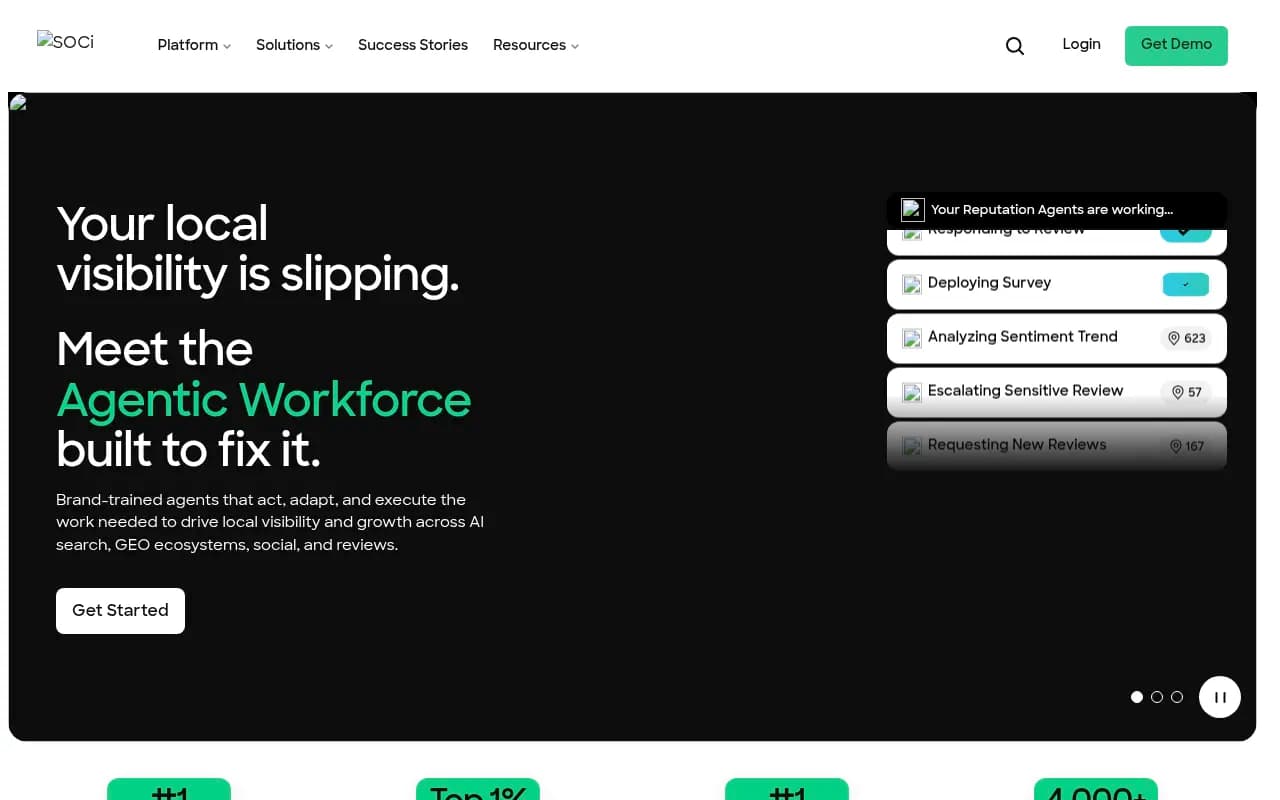
| SOCi | Enterprise multi-location reviews, listings, and social management | Large multi-location brands already using a franchise platform |
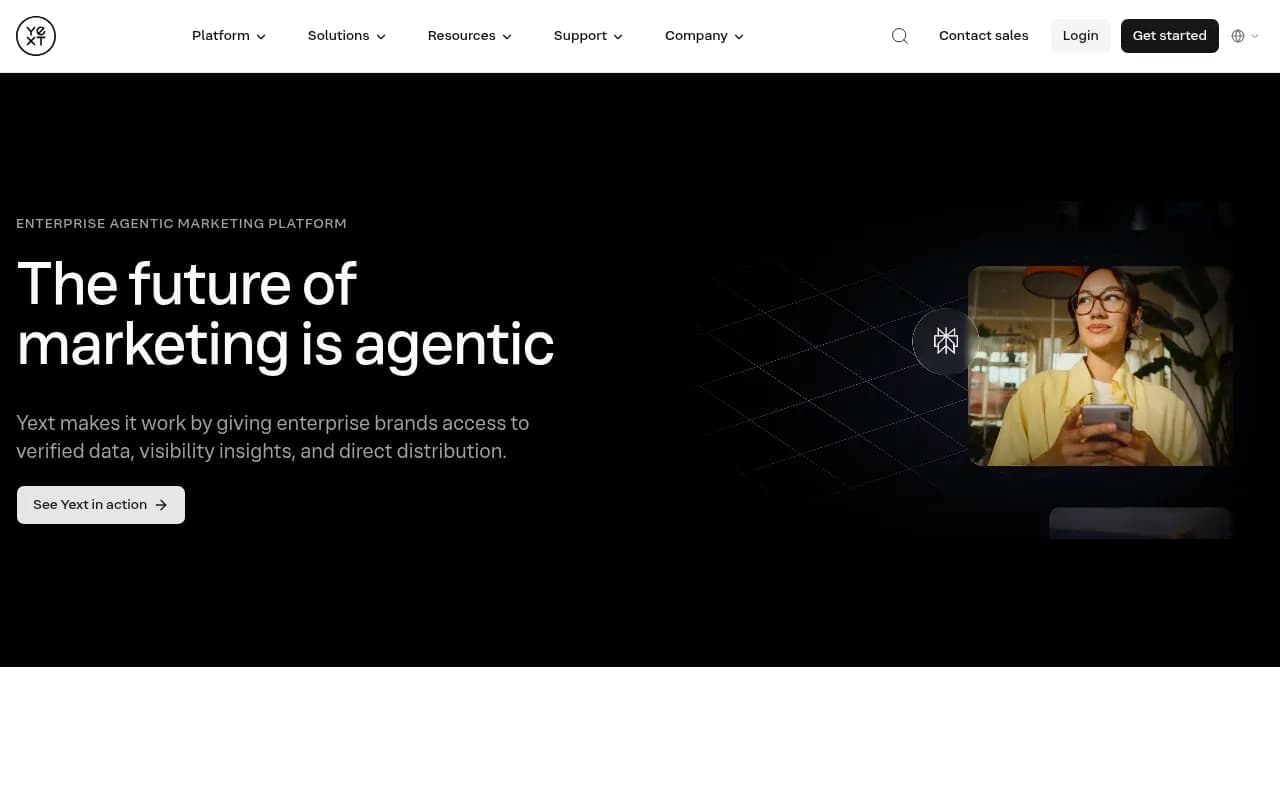
| Yext | Listings and location data distribution across search and AI answers | Businesses managing dozens or hundreds of locations |
| Local Dominator | AI visibility and share-of-voice tracking tied to Google Business Profile | Single-location or small multi-location operators on a budget |
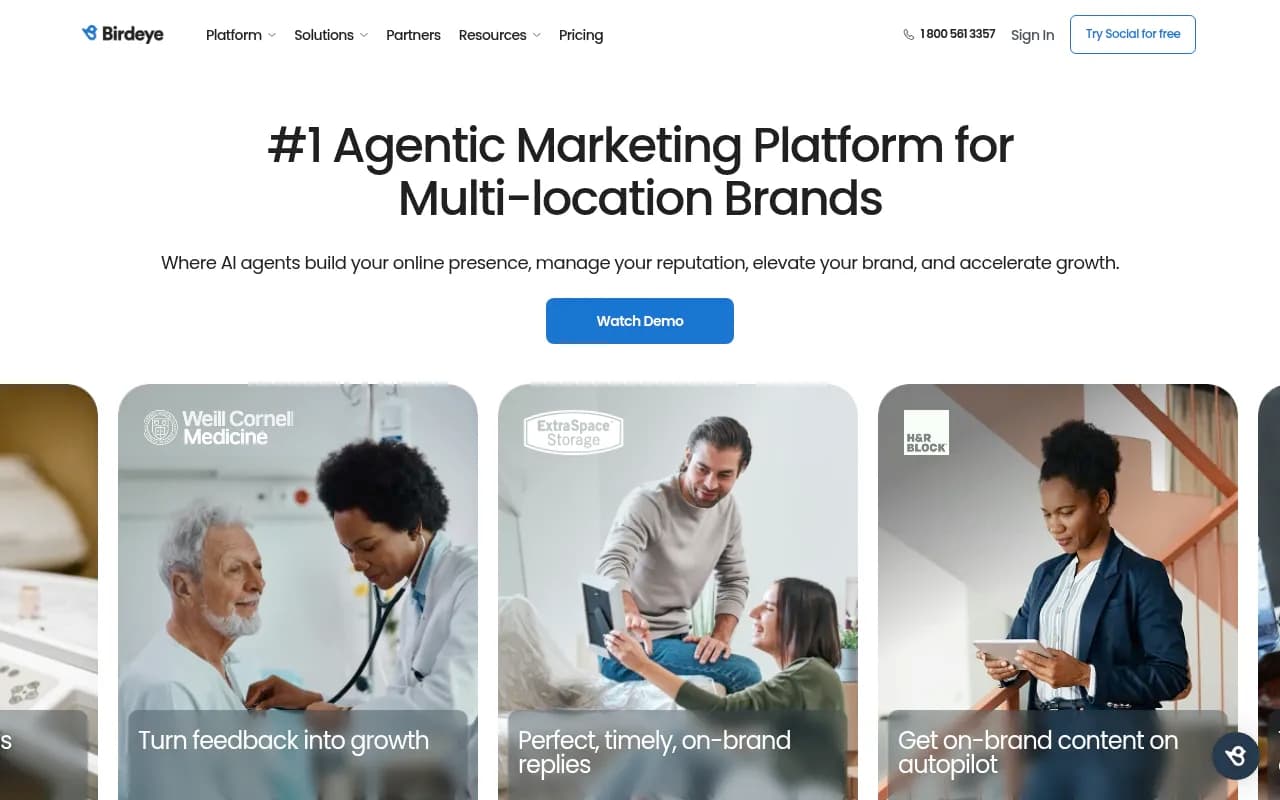
| Birdeye | Reputation management and review collection | Businesses whose first priority is review volume and response workflows |
If you want to compare more of the dedicated AI visibility trackers against each other before picking one, the directory at bestgeosoftware.com breaks down the GEO-specific platforms side by side.
The honest bottom line
A 5-star rating is still worth having. It still influences the local pack, it still converts browsers into customers on your website, and it still matters to the one in ten consumers who refuse to use anything below a perfect score. What it doesn't do, on its own, is guarantee an AI assistant will ever say your name.
The businesses closing this gap in 2026 aren't the ones with the most reviews. They're the ones showing up in the editorial content that AI actually cites when deciding who to recommend, keeping their Yelp data accurate because that's quietly become part of ChatGPT's data supply chain, and treating review responses as a trust signal rather than a chore. Star ratings open the door to being considered. They don't walk you through it.