Key takeaways
- Local visibility platforms like Birdeye manage listings, reviews, and Google Business Profiles well, but AI answer engines evaluate each location independently, which means a separate (or complementary) GEO layer is usually needed to see and fix AI-specific gaps.
- SOCi's 2026 Local Visibility Index found AI platforms recommend only 1.2% of business locations on ChatGPT, 7.4% on Perplexity, and 11% on Gemini, versus 35.9% visibility in Google's local 3-pack. AI search is far more selective than a Maps ranking.
- Promptwatch's own data shows ChatGPT citing roughly 5 sources per web-search response, compared to around 10 for Google AI Overviews and Perplexity, per Promptwatch's average sources per response data. For a branded, single-location query, each surviving source carries outsized weight.
- The right combo depends on scale: a 10-30 location brand needs a lighter stack than a 500-location enterprise, where governance and duplicate detection become the bigger problem than feature count.
- Don't buy three tools that track the same rankings. Pick one system of record for local presence, then add a dedicated GEO platform only to answer questions the core tool can't.
Why local SEO alone isn't enough anymore
For years, "local SEO tool" meant one thing: get the Google Business Profile right, build citations, collect reviews, rank in the 3-pack. That job hasn't gone away. But a second job has appeared next to it, and it behaves by different rules.
When someone asks ChatGPT "best dentist near downtown Austin" or asks Gemini to recommend a HVAC company, the answer engine isn't just reading your Google Business Profile. It's pulling from a mix of directories, review sites, your own website, and in Gemini's case, directly from Google Maps data. Business profile accuracy across these sources sits at only 68% on ChatGPT and Perplexity, versus 100% on Gemini, which is grounded in Maps. That gap is a big part of why Gemini recommends local businesses roughly 10x more often than ChatGPT does.
The scarier number from the same SOCi research: locations near 3.4 stars with under 5% review response rates aren't just ranked lower by AI, they're effectively excluded from recommendations entirely. AI search doesn't have a page 2. Either you clear the bar or you don't exist in the answer.
This is the real argument for stacking a local presence platform with a dedicated AI visibility and GEO tool. One manages the operational reality across hundreds of locations. The other tells you, location by location, whether AI answer engines can even find you and what's stopping a recommendation.
What a Birdeye-style local layer actually does
Birdeye and its peers (Yext, Uberall, Moz Local) solve the operational problem of multi-location brands: keeping listings, Google Business Profiles, hours, and reviews consistent across dozens or thousands of locations, plus surfacing reputation and sentiment trends per location.
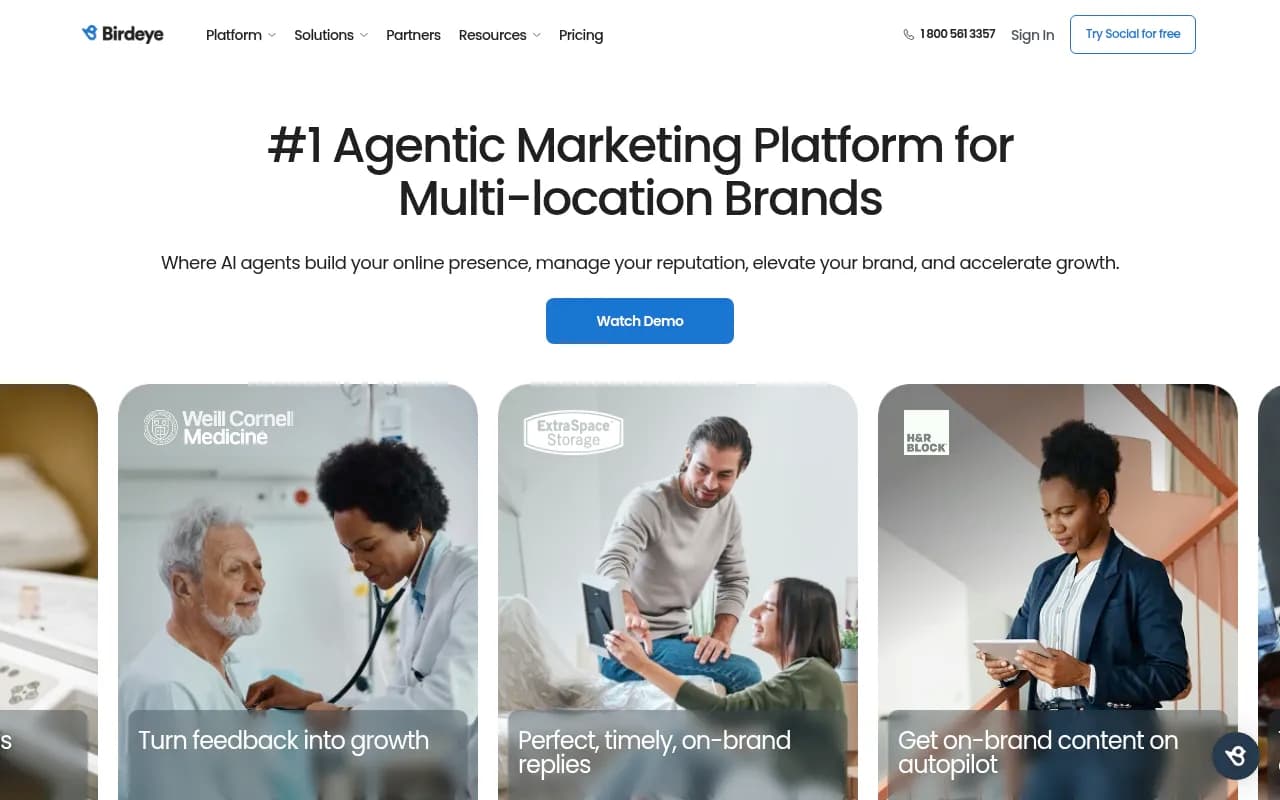
Birdeye itself has started folding AI visibility into this layer directly. Its Search AI product, launched in September 2025, tracks consumer prompts by brand, location, and keyword, benchmarks visibility against competitors, audits the accuracy of AI-generated business descriptions, and can suggest or publish AI-optimized content. For brands already paying for Birdeye to manage reviews and listings, that's a reasonable first stop.
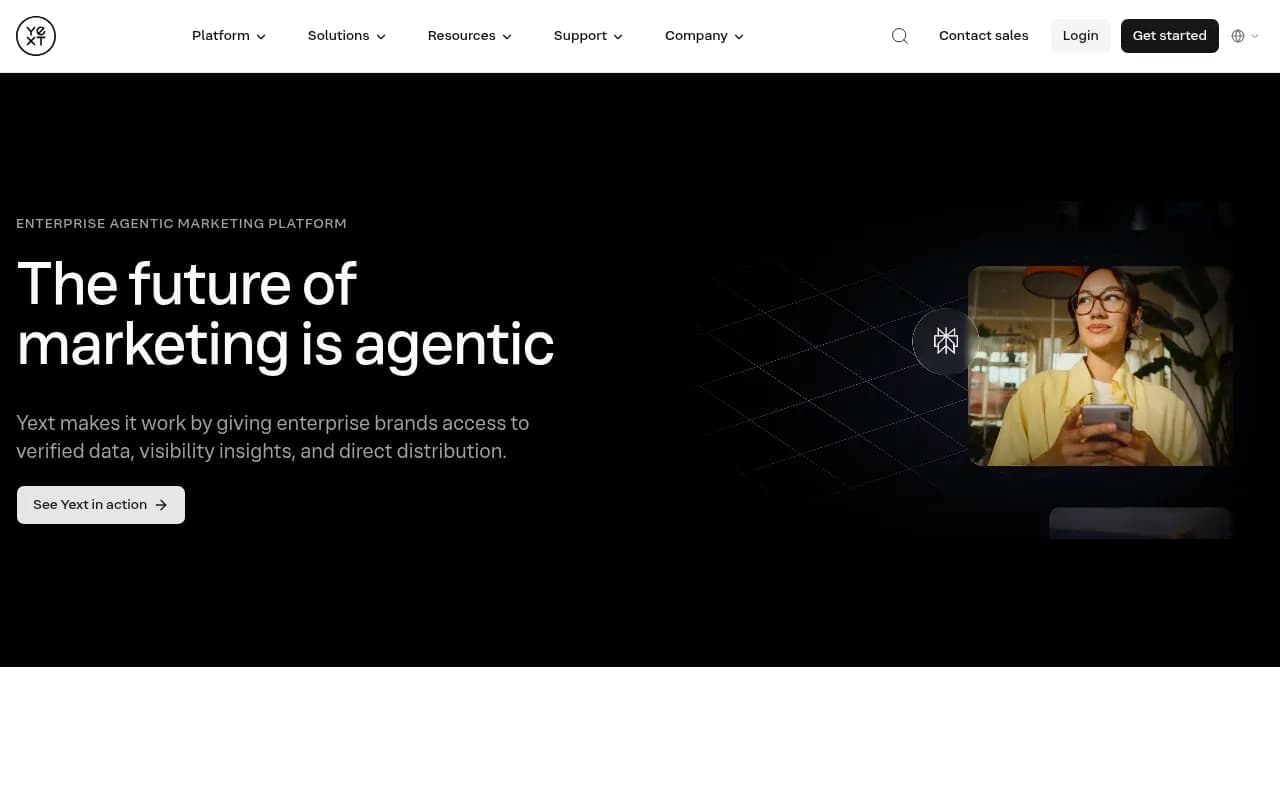
Yext plays a similar role on the data-governance side, treating your location data as a structured entity that it pushes out to dozens of directories and knowledge panels, and it increasingly markets itself as an AI-visibility platform too, with its own comparison page positioning itself against pure-play GEO tools.
Here's the catch worth naming directly: Birdeye's own marketing cites a claim that AI search "relies more heavily on relevant recent content from community sites like Reddit, Quora, and niche forums." That might have been true a year ago. It isn't now. ChatGPT's citation of Reddit collapsed from roughly 5.2% of citations to 0.09% after an August 2026 drop, and social platforms overall now make up less than half a percent of ChatGPT's citations, according to Promptwatch's social media citations by AI model data. Google AI Overviews tells a different story: it still pulls 12.2% of citations from social, led by YouTube at 4.28% and Facebook at 2.38%, which matters for local brands with active business pages. The point isn't that one platform's marketing is wrong on purpose, it's that this space moves fast enough that claims from six months ago can be stale by the time you read them. Verify against current data before building a content strategy on an old assumption.
What the GEO layer adds that local tools usually don't
A dedicated GEO platform answers a narrower but deeper question than a local presence tool: for a specific prompt, on a specific AI engine, why did (or didn't) my brand show up, and what's the fastest fix.
That means crawler-level visibility (is ChatGPT's or Claude's bot even reaching your location pages), citation-source breakdowns (which of your pages, or third-party pages about you, actually got cited), and increasingly, the ability to generate and publish fixes rather than just flag the problem.
Promptwatch is built around that full loop rather than monitoring alone. It tracks ChatGPT, Gemini, Claude, Perplexity, Grok, Google AI Overviews, and AI Mode, reads AI crawler logs to show which pages ChatGPTBot, ClaudeBot, PerplexityBot, and 400+ other bots actually read, and ties that back to real visitor traffic and conversions from AI platforms. For multi-location brands specifically, the state and city-level tracking in its Professional and Business tiers is the feature that matters: you can see visibility prompt-by-prompt for "best [category] in [city]" rather than one aggregate brand score.

Where this becomes genuinely useful for local brands is the content gap analysis and Content Agents. Instead of a dashboard that just tells you "you're not cited for this prompt," it can draft and publish the location page, FAQ, or comparison content that closes the gap, with a review inbox if you want a human in the loop. Crisp, one of its customers, scaled to 5-10 published articles per day using this workflow and saw 2x higher conversion rates from AI-driven traffic than traditional channels.
Other GEO platforms worth knowing in this space include Profound, which has strong multi-engine monitoring but reserves full model coverage for its enterprise tier starting around $2,000/month, and Semrush's AI Visibility Toolkit, a $99/month add-on to its existing suite that's a reasonable bolt-on if you're already a heavy Semrush user for traditional local keyword tracking.

Otterly.AI is the budget option worth mentioning for smaller multi-location brands: $29/month gets you 15 prompts across Google AI Overviews, ChatGPT, and Perplexity by default, though Gemini and Claude tracking cost extra. It won't give you crawler logs or content generation, but it's a reasonable first sensor before committing to a bigger platform.

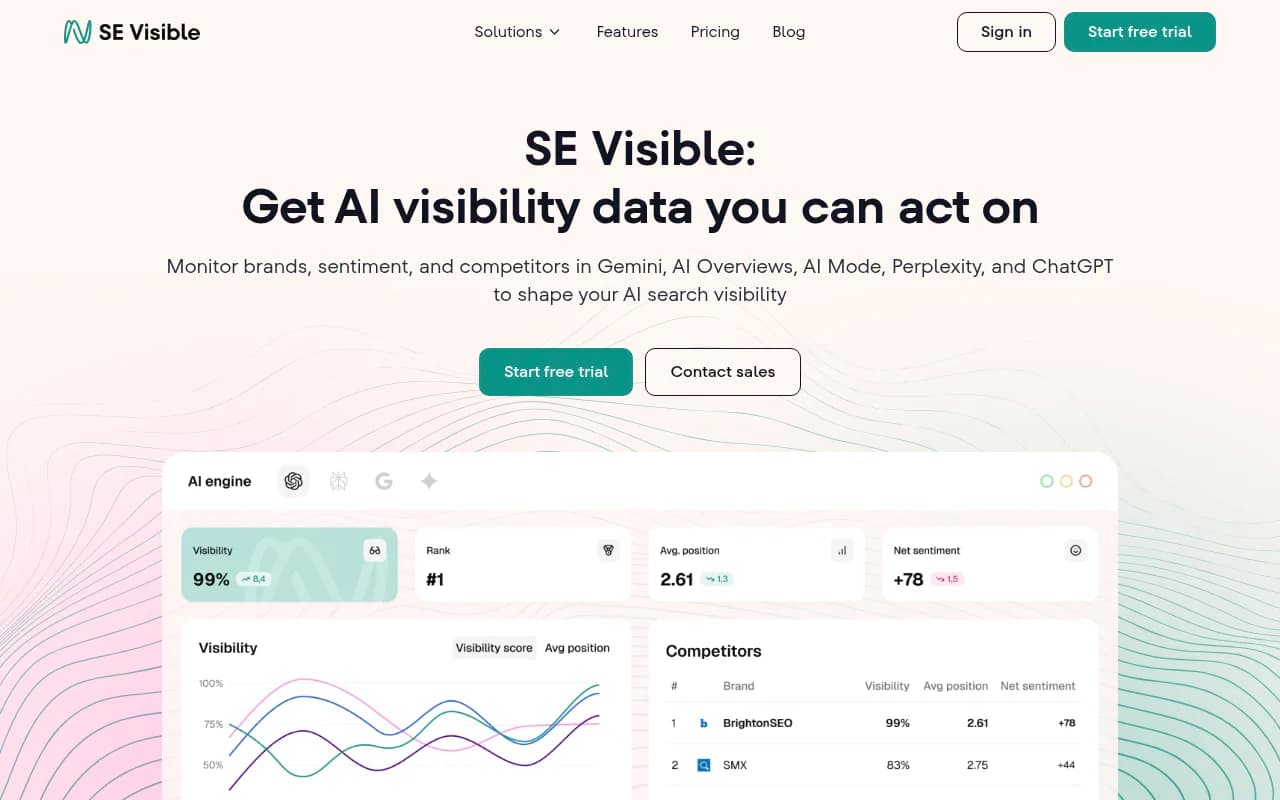
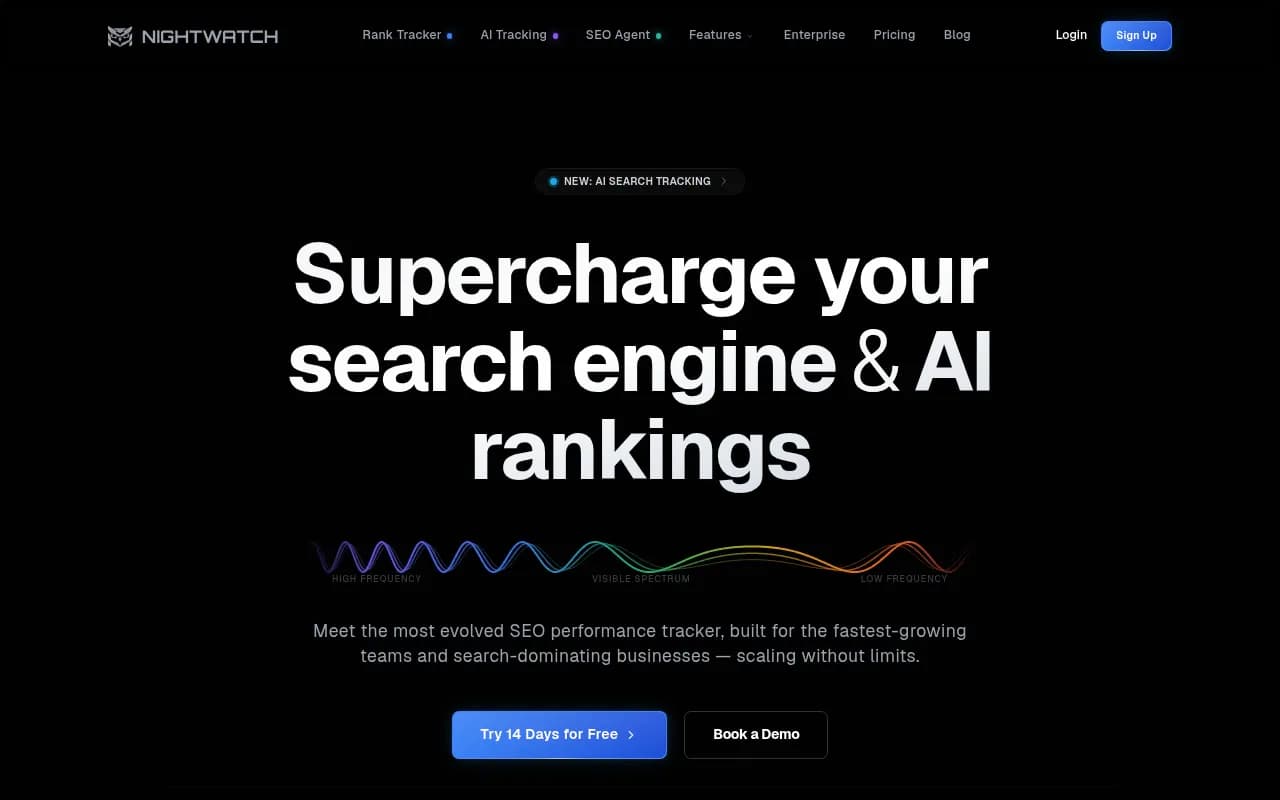
For agencies managing several local clients at once, SE Ranking's Visible tool and Nightwatch both combine traditional rank tracking with AI visibility monitoring in one subscription, which keeps the tool count down if your clients don't need the deeper GEO stack yet.
Comparison: matching the stack to your scale
| Brand size | Local presence layer | GEO/AI visibility layer | Why |
|---|---|---|---|
| 1-9 locations | Google Business Profile + basic listings tool | Otterly.AI or a free visibility checker | You don't need enterprise governance yet; a lightweight prompt tracker tells you if you're showing up at all |
| 10-30 locations | Birdeye or Moz Local for listings/reviews | Promptwatch Essential or SE Ranking Visible | You need per-location reporting plus enough GEO depth to catch AI-specific gaps before they compound |
| 150-1,000+ locations | Yext or Uberall for location data governance | Promptwatch Professional/Business for state/city tracking, crawler logs, and content automation | At this scale, duplicate detection and structured-data consistency matter more than feature lists; you need automated content generation to keep up |
| Agency managing multiple multi-location clients | Birdeye white-label or client-specific stacks | Promptwatch Agency tiers with white-label dashboards | Unlimited projects and prompts across clients beat per-client licensing |
Building the stack without redundant spend
A few practical rules worth following before you buy anything:
Pick one system of record for local data. If Birdeye or Yext is already managing your listings and reviews, don't also buy a second tool to re-track the same local rankings. Add a GEO platform specifically for the gap your local tool doesn't cover: crawler-level visibility, cross-model citation tracking, and content generation tied to AI gaps.
Check your crawler access before worrying about content. If GPTBot, ClaudeBot, or PerplexityBot can't reach your location pages because of a CDN or WAF rule, no amount of content optimization fixes that. Promptwatch's crawler log integration (via Cloudflare, Fastly, Vercel, and others) exists precisely because this is a more common failure point than people assume, especially at the enterprise level where security teams lock down traffic without realizing which bots are legitimate AI crawlers.
Don't mass-produce near-identical city pages. A common failure mode flagged by local SEO practitioners is generating hundreds of location pages that are, in effect, a library of polite duplicates with the city name swapped. AI answer engines and Google both penalize this. Real local proof points, actual reviews, actual photos, actual staff, still need human QA even when a Content Agent drafts the first pass.
Track review volume as a GEO input, not just a reputation metric. Review quantity and response rate function as a trust signal for AI recommendations the same way they do for the local 3-pack. One unverified but directionally useful claim circulating in the local SEO community suggests businesses need upward of 150 reviews per location before ChatGPT or Perplexity reliably name them in recommendations. Treat that specific number with some skepticism, but the underlying logic, that review density correlates with AI citation, lines up with the broader pattern: locations recommended by ChatGPT average 4.3 stars, compared to 3.9 for Gemini's picks.
What this looks like in practice
A 40-location dental group, for example, might run Birdeye as the operational core for review requests, listing sync, and location-level sentiment. On top of that, a GEO layer tracks prompts like "best orthodontist in [city]" across ChatGPT, Gemini, and AI Overviews, flags which locations have inaccurate AI-generated descriptions (a known weak spot, since only 68% of business profile data is accurate on ChatGPT and Perplexity), and generates FAQ content addressing the informational queries that trigger AI Overviews roughly 92% of the time for things like "how long does a dental implant consultation take."
That combination covers both halves of the problem: the operational consistency that keeps your data clean everywhere, and the AI-specific diagnostic and content layer that tells you exactly where the recommendation is breaking down and ships the fix.
If you want to browse more options in either category before committing, the GEO software directory at bestgeosoftware.com is a reasonable starting point for comparing platforms side by side, and 1001 SEO Media works with multi-location and local brands directly on building these stacks and the content strategy behind them, if you'd rather not run the comparison yourself.