Key takeaways
- Birdeye is a reputation and listings platform (reviews, messaging, social) with AI search visibility bolted on as one more dashboard tile; pricing is quote-gated and third-party estimates put it around $299-$449+ per location, per month.
- Promptwatch is built from the AI citation data outward, with self-serve pricing starting at $95/month, tracking across nine AI engines plus crawler logs and content-gap analysis against your own site.
- Promptwatch's Business tier adds state and city-level tracking, which matters more to a multi-location brand than most marketers realize, since Promptwatch Data shows branded, single-business prompts pull from far fewer cited domains than generic "best X near me" searches.
- If your reviews, listings, and local pages are already a mess, Birdeye's operational muscle might be worth the per-location cost. If that infrastructure is fine and you just need to know why ChatGPT recommends your competitor instead of you, and want it fixed, Promptwatch is the cheaper, more transparent option.
- Neither tool does both halves of the job perfectly. A lot of local brands end up running a lightweight reputation tool alongside a dedicated AI visibility platform rather than paying for one bloated suite.
Why this comparison even exists
A few years ago "online reputation" meant Google reviews, Yelp, and maybe a Facebook rating. Now there's a second judge in the room: ChatGPT, Gemini, Perplexity, and Google's AI Overviews, all deciding in real time whether to recommend your plumbing company, dental practice, or five-location coffee chain when someone asks "best [service] near me."
Birdeye and Promptwatch both claim to help with this, but they come at it from opposite directions. Birdeye started as a reviews and listings platform for multi-location businesses and added AI search tracking as a feature inside that suite. Promptwatch started as an AI citation and GEO platform and never touched reviews or listings at all. Picking between them isn't really "which is better", it's "which problem do you actually have."
What Birdeye actually is
Birdeye calls itself the "#1 Agentic Marketing Platform" for multi-location brands with anywhere from 100 to 10,000+ locations. The core product is reviews, listings, messaging, surveys, and social, all unified per location. AI Search is one module inside that stack: it tracks visibility, citations, and sentiment for a brand and each individual location across ChatGPT, Gemini, Perplexity, Google AI Overviews, Google AI Mode, Claude, and Grok, then routes what it finds into "agents" that go fix listings, generate reviews, and update local pages.
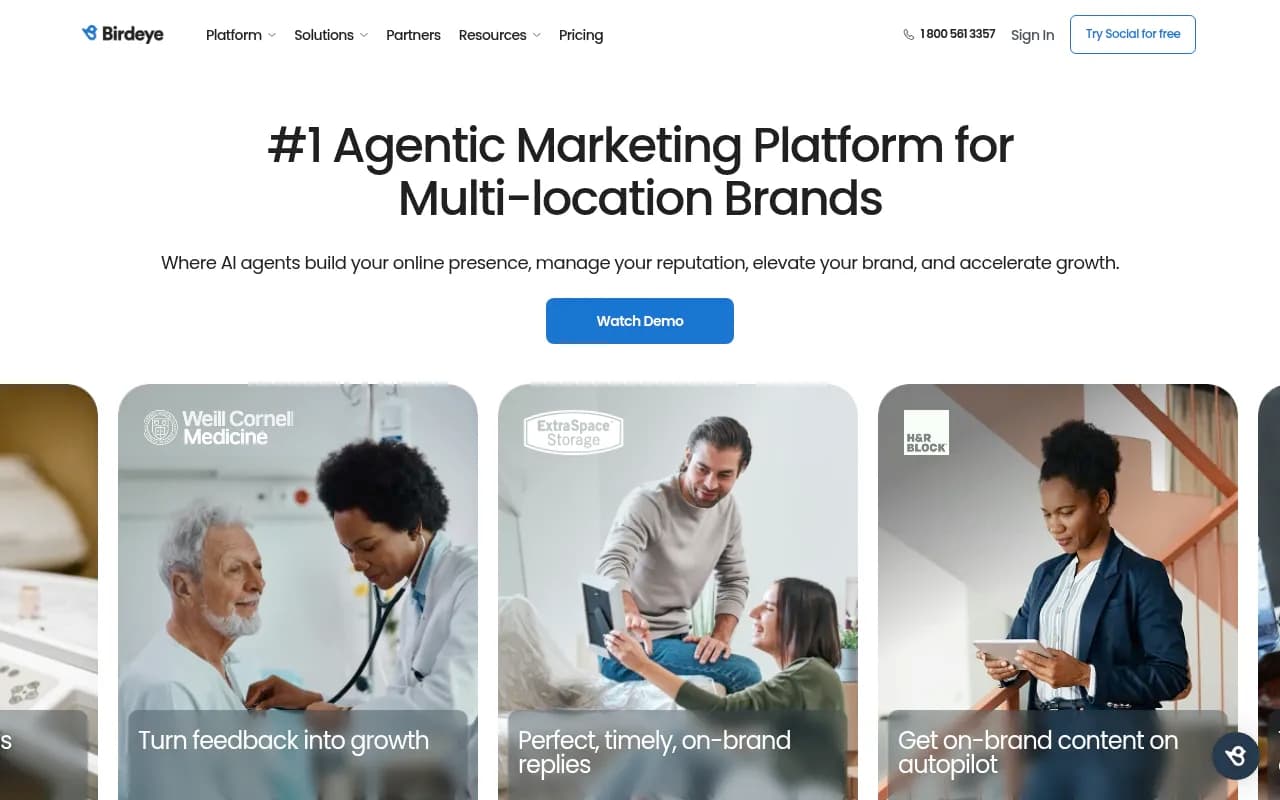
That's a genuinely useful idea for a 200-location dental group whose Google Business Profiles are half out of date. The AI visibility layer becomes one more reason the listings need fixing, and you can act on it inside the same dashboard where you're already managing reviews.
The catch is Birdeye doesn't publish pricing anywhere. You fill out a sales form segmented by location count (1-3, 4-9, 10-39, 40-249, 250-999, 1000+), and third-party benchmarks from sites like Emitrr and WiserReview converge on roughly $299 to $449+ per location, per month, usually billed annually, with month-to-month running about 40% higher. Run the math on ten locations at the low end and you're already past $2,900/month before adding anything. Several independent reviews also flag auto-renewing annual contracts and a cancellation process people describe as difficult. That's worth knowing before a sales call, not after you've signed.
What Promptwatch actually is
Promptwatch doesn't touch reviews, listings, or messaging at all. It's purely an AI search visibility and GEO platform: it scrapes the real user interfaces of ChatGPT, Gemini, AI Overviews, AI Mode, Perplexity, Claude, Grok, Meta Llama, and DeepSeek daily, tracks what gets cited and why, and then tries to close the loop by generating and publishing the content that fixes the gap.

The pricing is public and simple. Essential is $95/month for one project, 50 prompts, 6,000 responses, and tracking across four of the eight models at once. Professional is $245/month and adds crawler logs, automated content, and more prompt volume. Business, the most popular tier at $579/month, adds state and city-level tracking, ChatGPT Shopping insights, and Ads Radar. For a multi-location brand, that city-level tracking on Business is the feature that matters most, since it's the closest thing Promptwatch has to Birdeye's location-by-location approach, just without the listings and review management wrapped around it.
Why location-level AI tracking isn't a nice-to-have
Here's the part both companies get right: generic brand monitoring and AI search monitoring are different jobs. Brand monitoring tells you what people say about you. AI search monitoring tells you what the AI says about you to someone who hasn't decided yet.
Promptwatch's own data backs up why this is trickier for local brands than it looks. Branded prompts, the kind where someone names your business directly ("is [Business Name] any good"), pull from far fewer cited domains than a generic local-intent search. In Promptwatch's analysis of unique domains per response, 40.7% of brand-specific prompts cite five or fewer domains, and only about a fifth cite ten or more, compared to over half of unbranded, "best X near me"-style prompts citing ten or more domains (https://promptwatch.com/data/chatgpt-unique-domains-per-response). That's a double-edged fact. When someone asks about you by name, fewer sources get a say, so each one, your website, your review profile, a single Reddit thread, carries disproportionate weight. When someone asks a generic local-intent question, you're fighting for a slot among a crowd of ten-plus citation sources.
It also matters what kind of content actually gets cited. Promptwatch's citation-type data for branded prompts shows product and landing pages together earn almost half of citations, and reviews jump to 5.6% share, more than three times their overall average (https://promptwatch.com/data/chatgpt-citation-share-by-domain-rank-august-2026). In plain terms: for a local brand being asked about by name, your own website pages and your review profile both matter a lot more than they do for a generic category search. That's exactly the overlap zone where Birdeye and Promptwatch collide, one owns the review side, the other owns the content-and-citation side.
There's also a domain-authority angle that should be reassuring to smaller local brands. Mid-authority sites (DR 46-75) captured close to half of all ChatGPT citations in August 2026, while the biggest sites (DR 91-100) actually lost share across the month, ending around 4.4%, lower than small DR 0-15 sites (https://promptwatch.com/data/chatgpt-citation-share-by-domain-rank-august-2026). You don't need Yelp-level domain authority to get cited. You need the right content, structured the right way, on a site that's clean enough to be read.
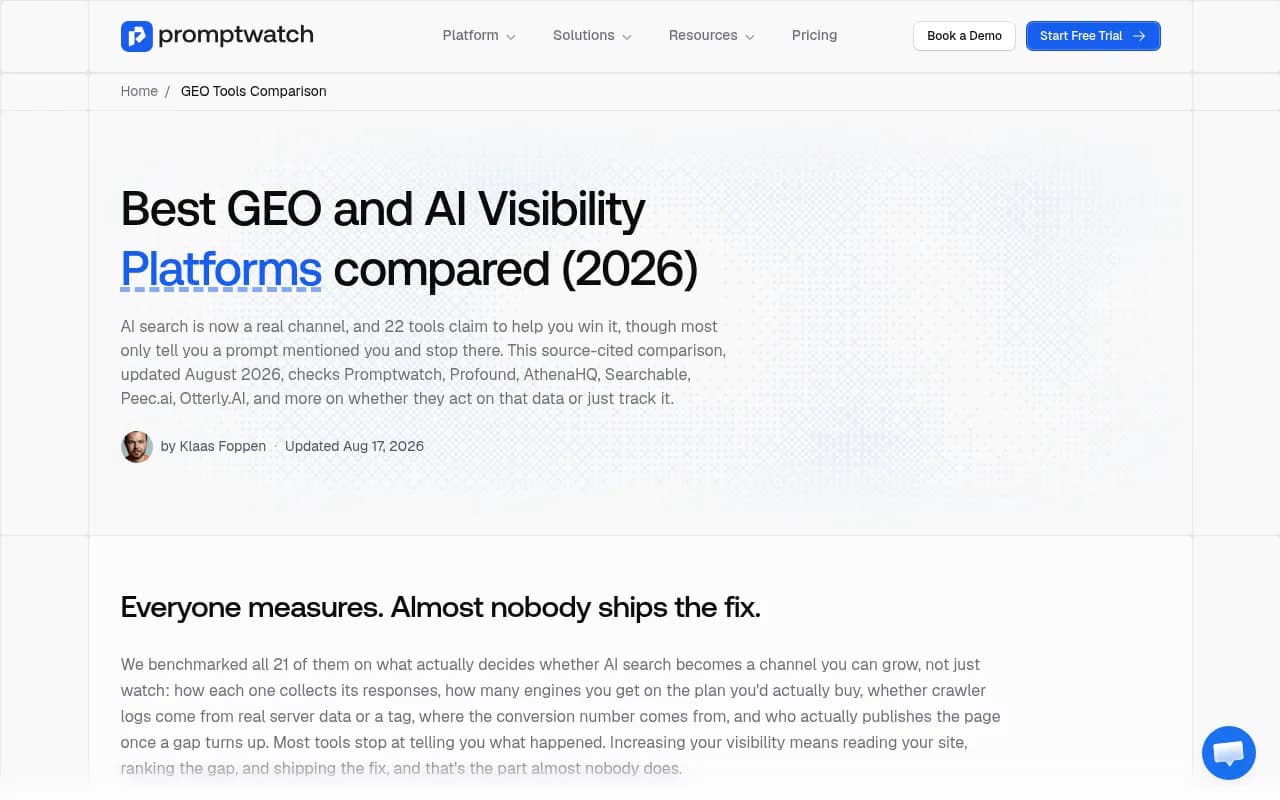
Side-by-side comparison
| Birdeye | Promptwatch | |
|---|---|---|
| Core product | Reviews, listings, messaging, social, surveys, AI Search as a module | Dedicated AI search visibility and GEO platform |
| AI models tracked | ChatGPT, Gemini, Perplexity, AI Overviews, AI Mode, Claude, Grok | ChatGPT, Gemini, AI Overviews, AI Mode, Perplexity, Claude, Grok, Meta Llama, DeepSeek |
| Location-level tracking | Yes, built around multi-location from the ground up | Yes, but only on the $579/mo Business tier (state and city level) |
| Pricing model | Quote-gated, no public numbers | Public, self-serve, starts at $95/month |
| Estimated entry cost | ~$299-$449+ per location/month (third-party benchmarks) | $95-$579/month flat, regardless of location count |
| Review and listings management | Core feature | Not offered |
| Crawler logs (who's actually reading your site) | Not a stated feature | Included from the Professional tier |
| Content generation and CMS publishing | Local page updates via "agents" | AEO articles, Content Agents publish to Webflow, Framer, WordPress |
| Content gap analysis against your own pages | Not described in public materials | Included, indexed against your own crawled site |
| Free trial | 30 days (per third-party sources) | 7 days on Essential/Professional |
| G2 rating | 4.7/5 (4,247 ratings) | 4.7/5 |
Where each one actually wins
Birdeye wins if your real problem is operational chaos across many locations: inconsistent Google Business Profiles, no system for generating or responding to reviews, scattered local pages that haven't been touched in years. Fixing that mess is, honestly, a prerequisite for AI visibility anyway, since AI engines lean on the same structured business data humans do. If you need one platform that handles reviews, listings, and a bit of AI tracking without stitching together three vendors, Birdeye's bundle makes sense, even at its higher price.
Promptwatch wins if your listings and reviews are already fine, or managed somewhere else, and what you actually need is granular visibility into why AI engines aren't citing you and a way to fix the content gap. The crawler logs are a genuine differentiator here: Promptwatch can show you when ChatGPTBot or PerplexityBot actually crawled a specific page and whether it hit an error, which Birdeye's public materials don't describe at all. That's the difference between guessing why you're invisible and knowing. Promptwatch's content-gap analysis, which indexes your own crawled pages rather than just copying whoever got cited instead of you, is also a meaningful step beyond most monitoring-only tools in this space.
One honest caveat: Birdeye's own "State of AI Search 2026" report is gated behind an email form, so the only verifiable claim from it publicly is that it analyzed "thousands of real-world local-intent prompts" across three engines, with no concrete percentages visible without handing over your email. Promptwatch publishes its research in the open with exact figures and date ranges, which at minimum makes it easier to check the data yourself before trusting it.
Other tools worth a glance
Birdeye and Promptwatch aren't the only options, and depending on your size, a lighter tool might cover what you need without the commitment of either.
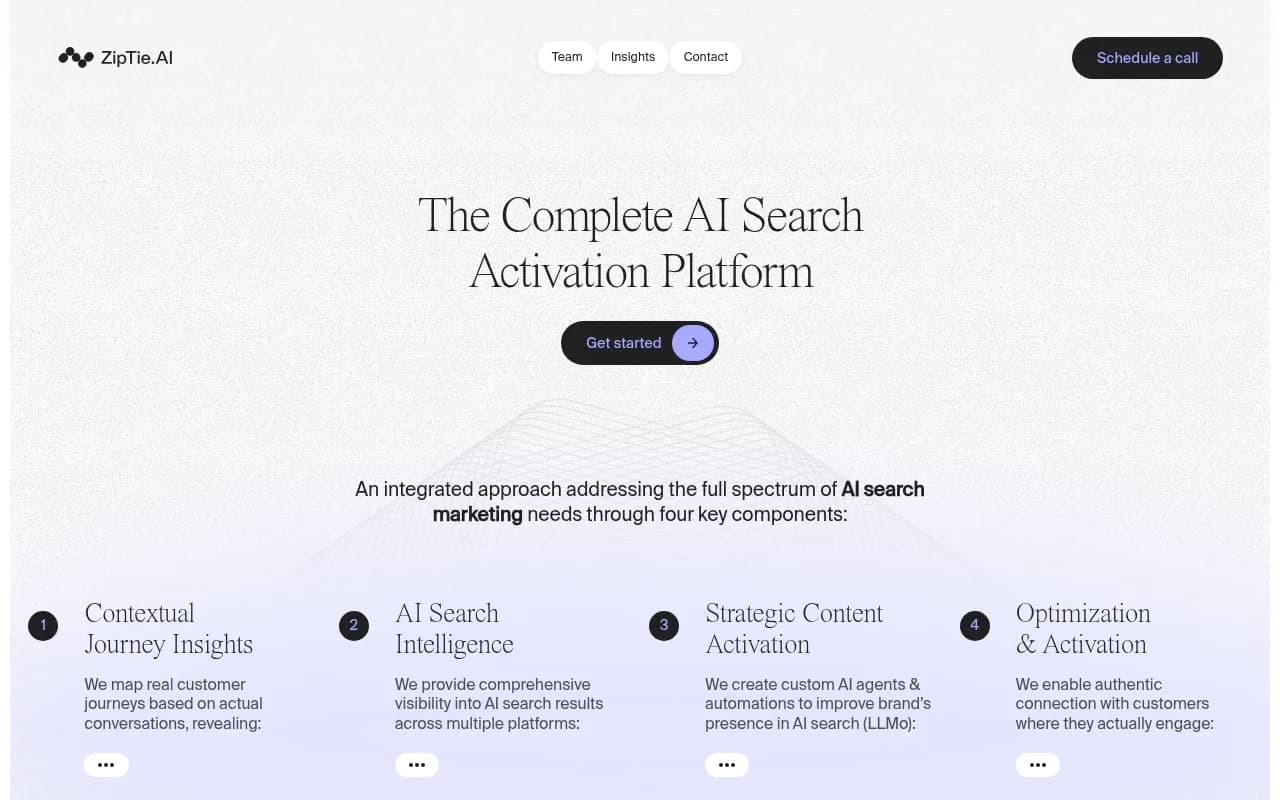
ZipTie does a narrower, deeper analysis of AI search visibility and is worth a look if you want something between a simple tracker and a full platform.
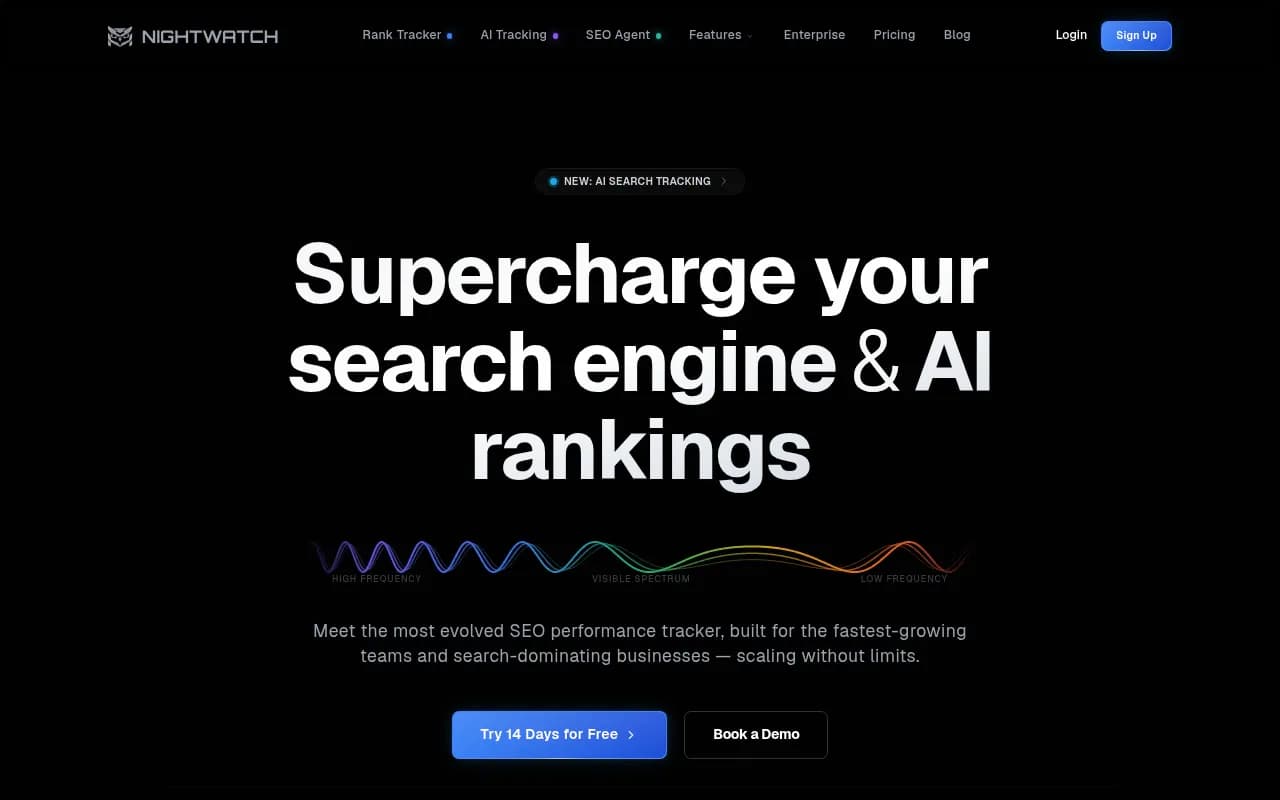
Nightwatch is more of an SEO rank tracker that's added AI visibility monitoring, useful if you already run your SEO reporting through it and don't want a second login.
If you want a broader view of what's out there before committing, the GEO software directory at bestgeosoftware.com and the AI rank tracking directory at ai-rank-tools.com are both good starting points for comparing a wider set of tools side by side.
How to decide, practically
Start with an honest audit of what's actually broken. If you pull up your top five locations in Google Maps right now and the hours are wrong, the photos are stale, and nobody's responded to a review in three months, that's your bottleneck, not AI citations. Fix that first, with Birdeye or a cheaper reputation tool, before worrying about what ChatGPT says about you.
If your listings and reviews are in decent shape and you genuinely don't know why a competitor keeps getting recommended instead of you in AI answers, that's a Promptwatch problem. Run its crawler logs for a month and you'll likely find something concrete: a page AI bots keep hitting and bouncing off of, or a content gap where a competitor's comparison page is getting cited and yours doesn't exist.
And if you've got the budget, there's no rule against running both. A reputation platform handling the operational side and a dedicated AI visibility tool handling the citation and content side isn't redundant, it's just two different jobs that happen to show up on the same ChatGPT screen.